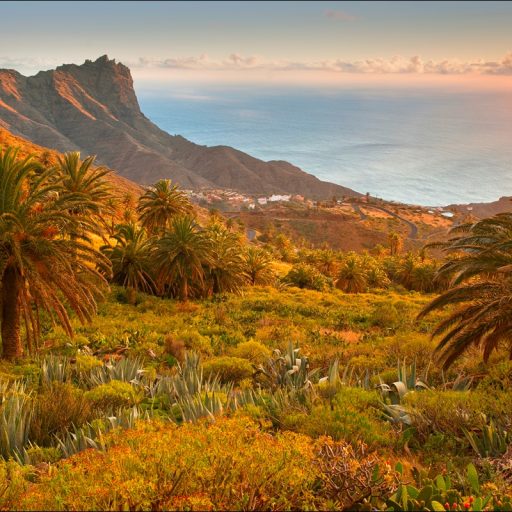
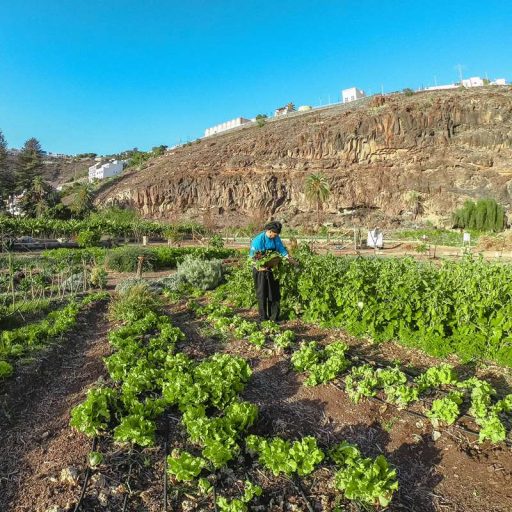
If you are a nature lover like us, you simply cannot miss our tours of the botanical garden or our walks through the banana plantations that form part of the hotel’s landscape, always accompanied by our guide Jürgen, who shares his knowledge and passion on every tour.
During the botanical garden tour, as you stroll along the different paths surrounding the bungalows, you will discover and admire first-hand more than fifty international plant species, which we carefully nurture and which the island’s rich environment allows to flourish in all their splendour.
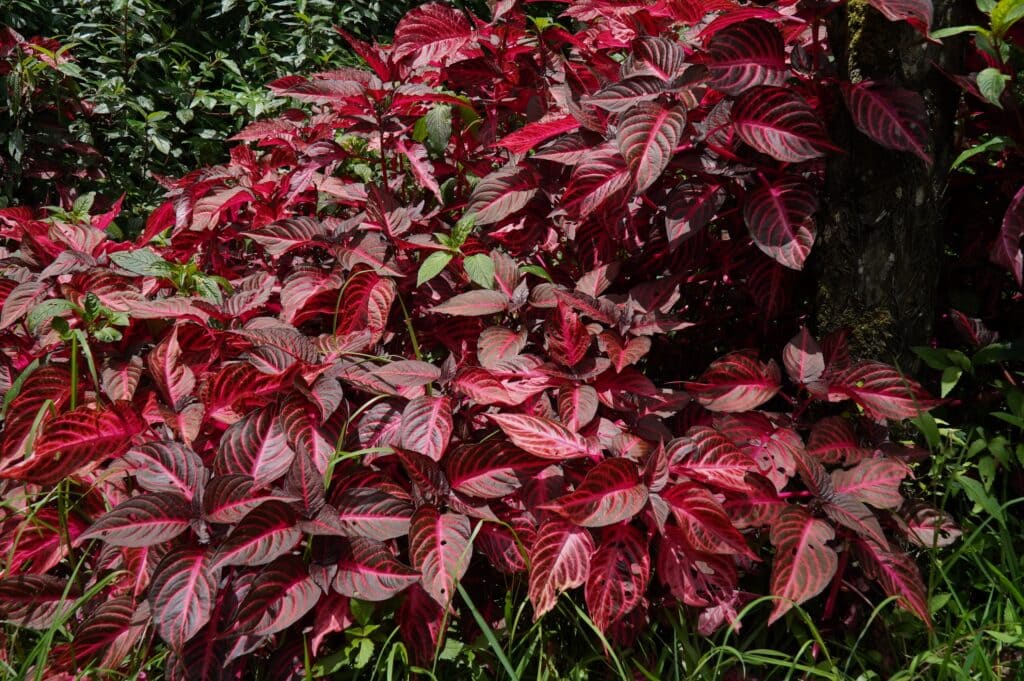
Acalypha wilkesiana is a tropical shrub that grows up to 3 metres tall, notable for its copper, green and reddish foliage. Its flowers are small and hidden among the leaves. Very ornamental in warm climates, it does not tolerate frost. Perfect for adding colour to tropical gardens.
Tropical
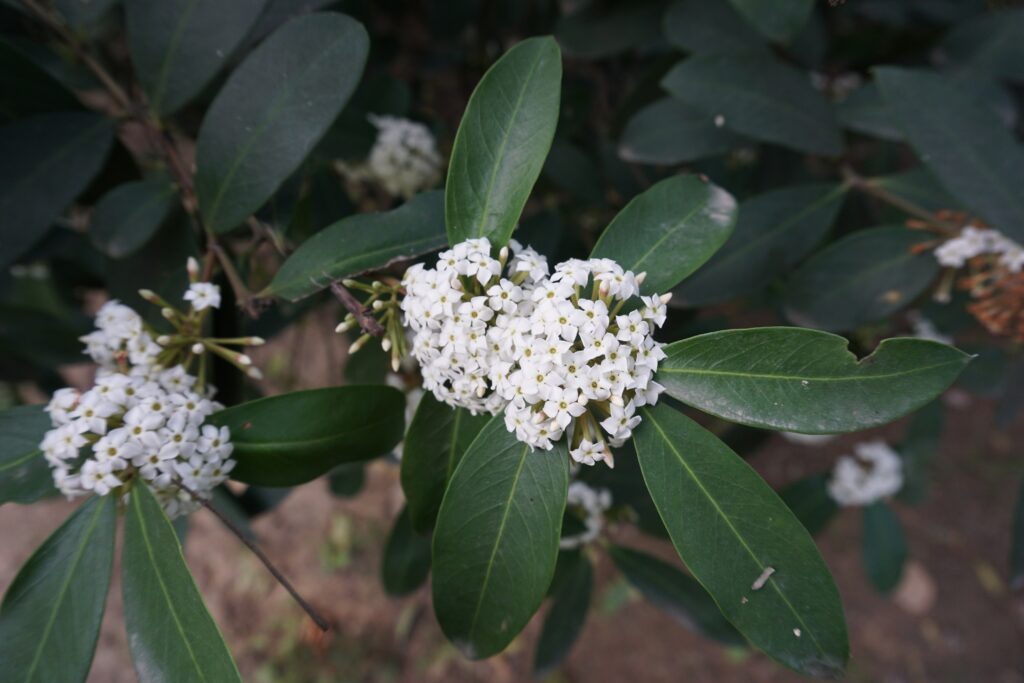
Acokanthera oblongifolia
Wintersweet
The Wintersweet (Acokanthera oblongifolia) is a perennial shrub from southern Africa with glossy green leaves and white or pink flowers at the end of winter. Although decorative, its fruit is poisonous and should not be eaten. It is cultivated in gardens for its elegant form and resistance to heat.
South Africa
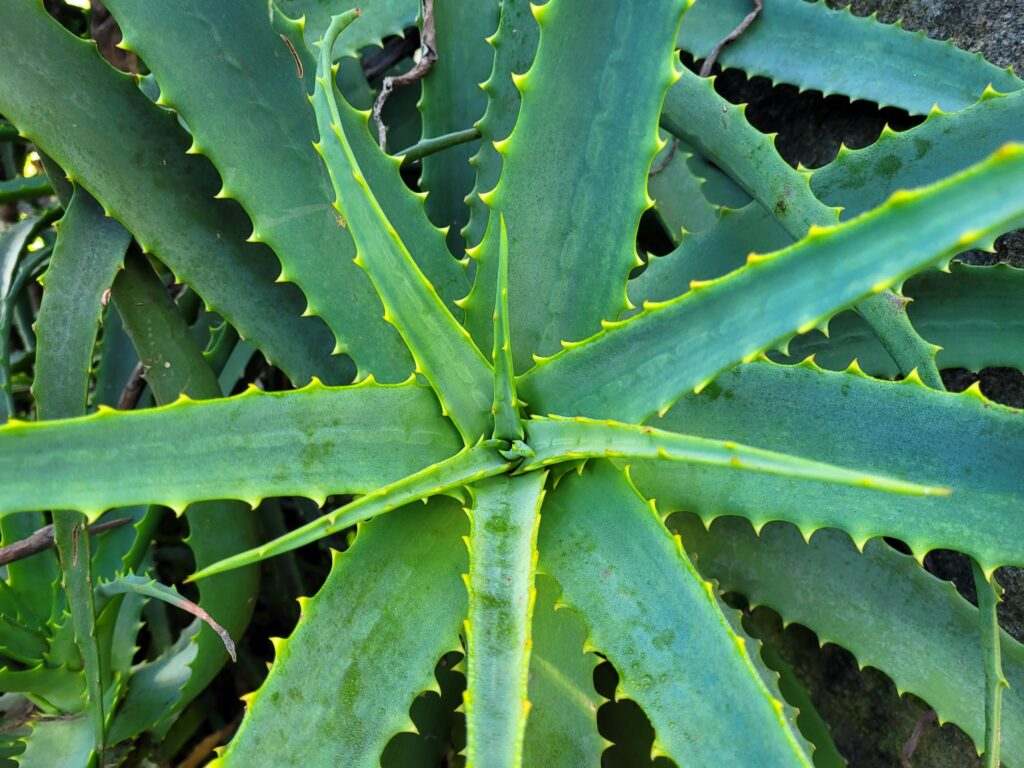
ALOE VERA
Aloe vera is probably the most famous medicinal plant in the world. Its fleshy, green leaves with serrated edges form a rosette at the base. In spring it produces yellow flowers in tall clusters. It has been used in medicine and cosmetics for thousands of years thanks to its gel, which soothes, moisturises and regenerates the skin. In the Canary Islands, it grows well in sunny, dry areas.
Arabia
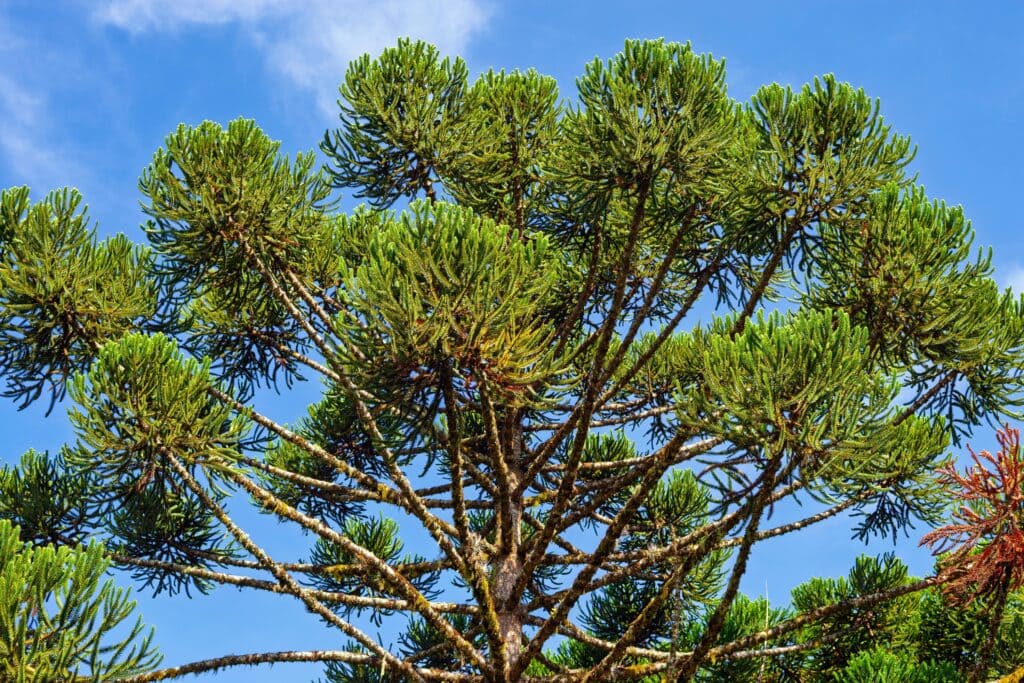
Araucaria Heterophylla
Norfolk Island Pine
The Norfolk Island pine (Araucaria heterophylla) is not a true pine, although it resembles one. It is distinguished by its symmetrical shape, with branches arranged in almost perfect tiers. In its native habitat it can grow up to 68 metres, though it remains smaller in gardens. Discovered in 1774 by Captain Cook on Norfolk Island (Australia), today it is widely grown as an ornamental tree and even as a so-called ‘tropical Christmas tree’.
Norfolk Island
Arecastrum Romanzoffianum
Cocos Palm
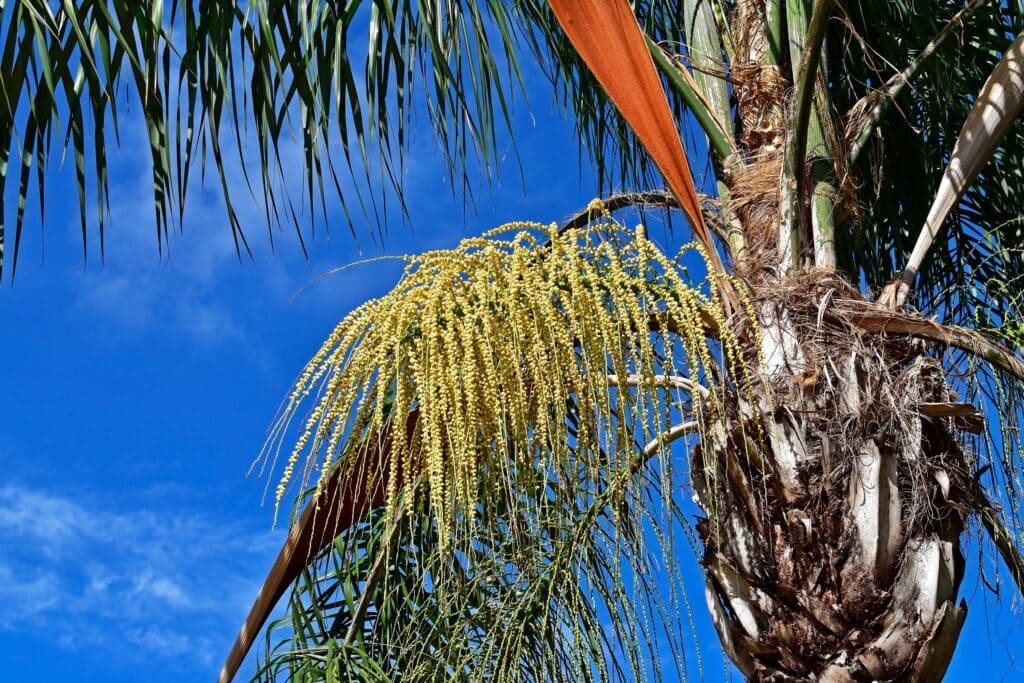
The Cocos palm (Syagrus romanzoffiana) can reach 25 metres in height, with a thin grey trunk crowned by long, feathery leaves. Widely used in avenues and parks, it offers an elegant, tropical image. It flowers in summer and its orange fruits, grouped in clusters, appear at the end of the season. It is native to South America and is now found in many gardens worldwide.
Brazil
Bauhinia Variegata
Orchid Tree
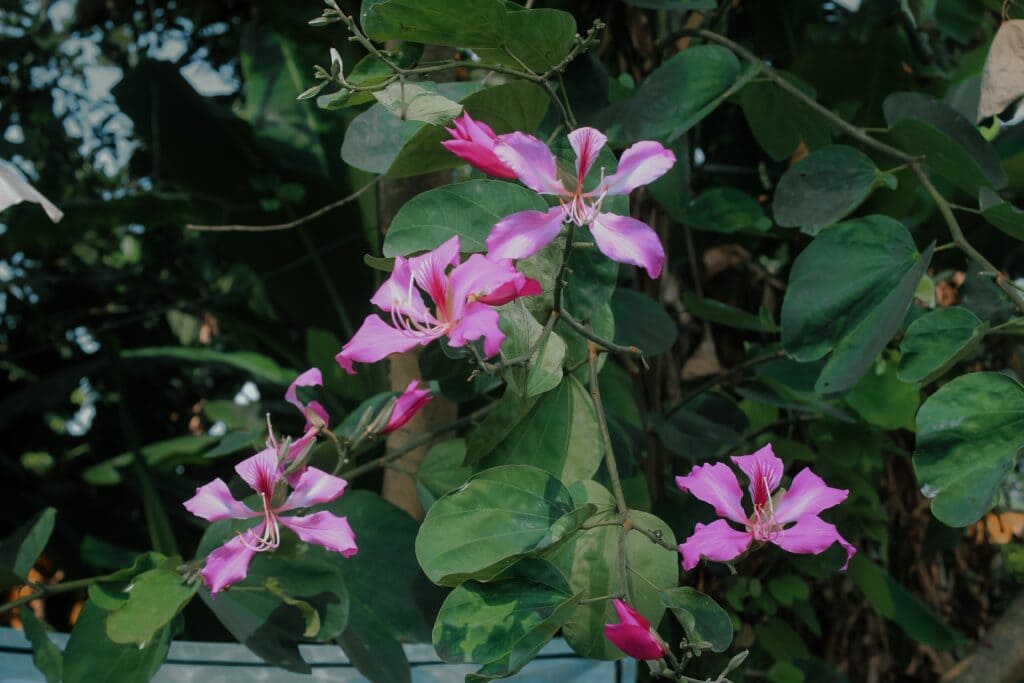
The Orchid tree (Bauhinia spp.) is famous for its spectacular pink, purple or white flowers, reminiscent of orchids. It blooms from late winter to early summer, filling parks and avenues with colour. It can grow up to 12 metres tall and its split-heart-shaped leaves make it even more special. In Hong Kong, it is a national symbol.
India
Butea Monosperma
Indian Tulip Tree
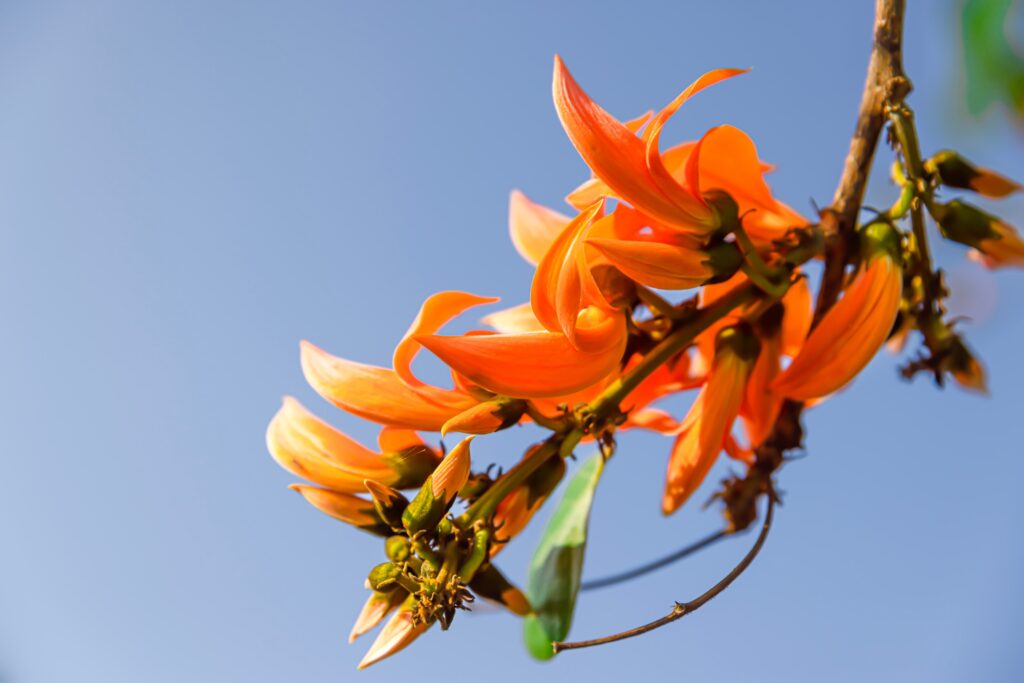
The Indian tulip tree (Butea monosperma) is a 15-metre tree that in spring is covered with orange and red flowers so bright that they look like flames. In India, it is celebrated in poems and songs, as its flowers herald the arrival of the most joyful season. Dyes, resins and traditional medicines are also obtained from this tree.
India
Callistemon Rigidus
Bottlebrush
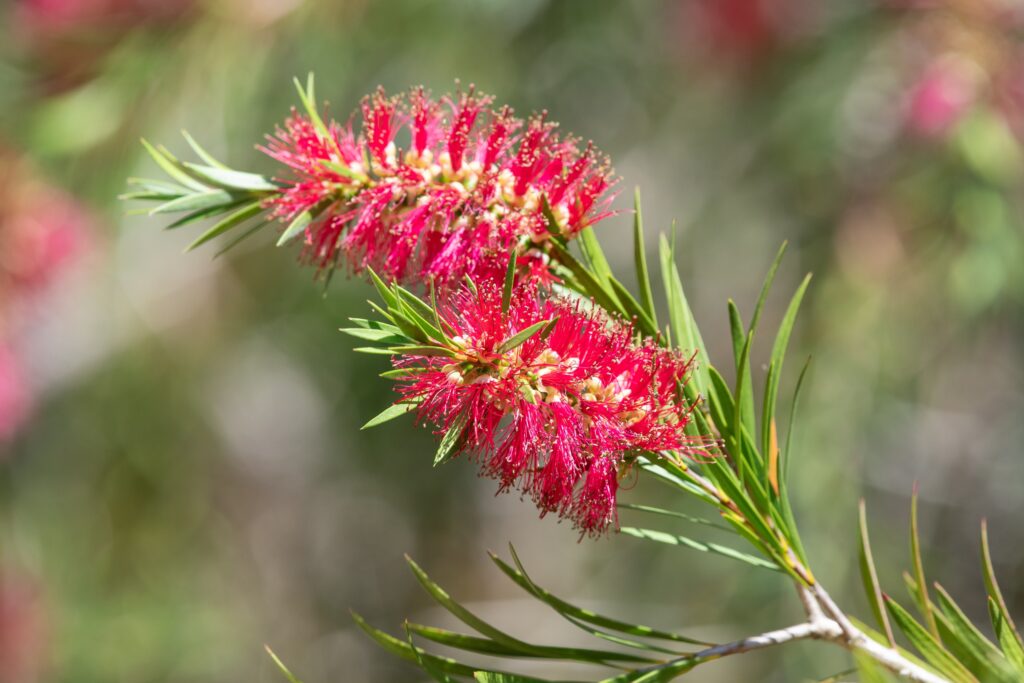
The Bottlebrush (Callistemon rigidus) is a shrub native to Australia, very striking for its bright red brush-shaped flowers. It grows up to 3 metres tall and blooms in clusters that attract insects and birds. It is very hardy and adapts well to hot, dry climates, making it popular in Mediterranean and tropical gardens.
Australia
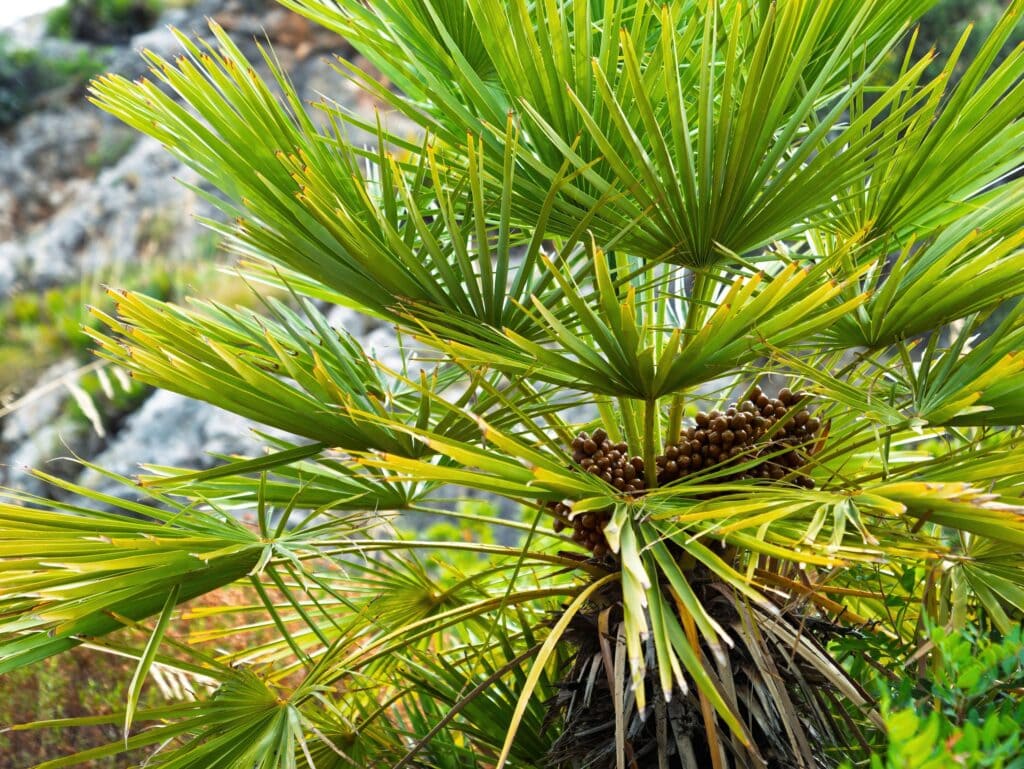
Chamaerops Humilis
European Fan Palm
Chamaerops humilis, known as the European fan palm, is the only palm native to Europe. It grows in small clusters of 3–4 metres in height, with fan-shaped, bluish-green leaves and spiny stems. Very resistant to drought, it is common along Mediterranean coasts and provides shelter for many birds and small mammals. It is prized in landscaping for its hardiness and compact size.
Malta
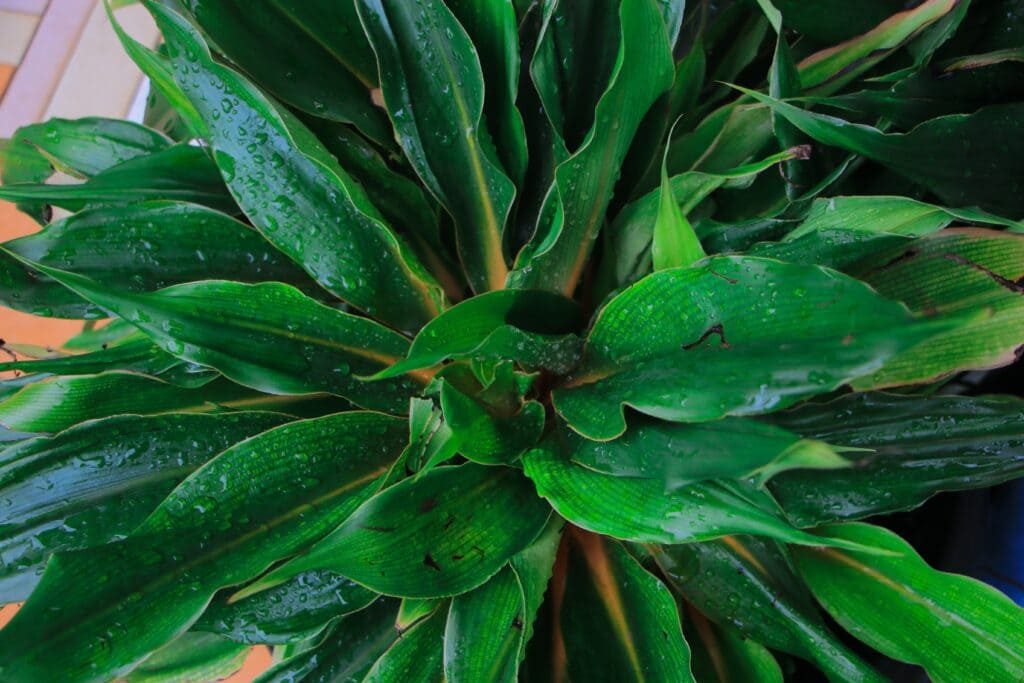
Chlorophytum “Green Orange”
Orange Spider Plant
Chlorophytum orchidastrum is an easy-to-care-for houseplant, known for the orange colour of its stems. Its long green leaves form an elegant rosette. It grows quickly and produces plantlets that allow easy propagation.
Africa
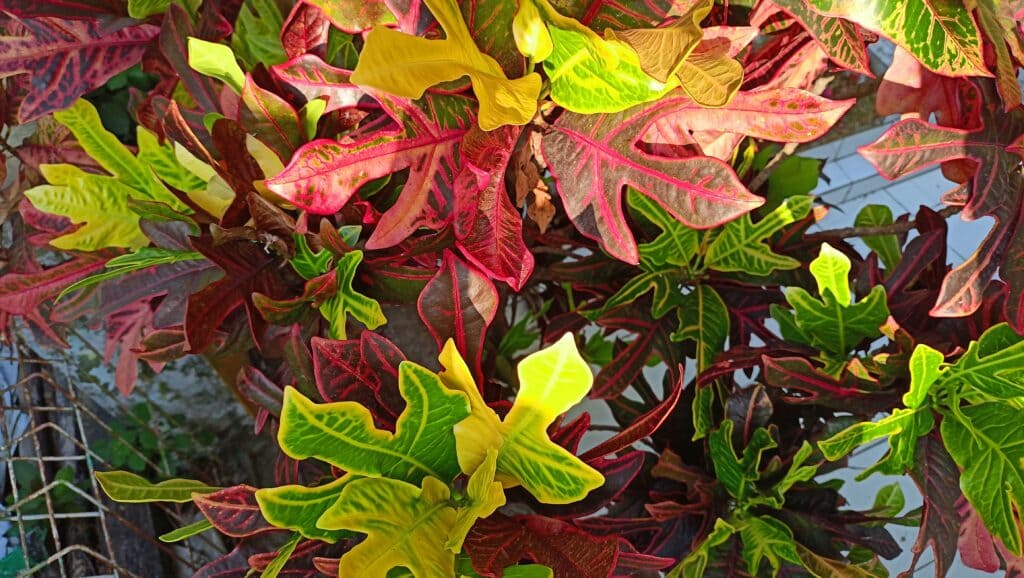
Codiaeum Variegatum
Garden Croton
The Garden croton (Codiaeum variegatum) is a tropical shrub famous for its colourful leaves: green, yellow, red, orange or even purple, with a wide variety of shapes. It can grow up to 3 metres tall in the wild, although in gardens and pots it is usually smaller. It is a very decorative plant that adds an exotic and cheerful touch to any corner. Native to Southeast Asia, it needs warmth and light to maintain its bright colours.
Tropical
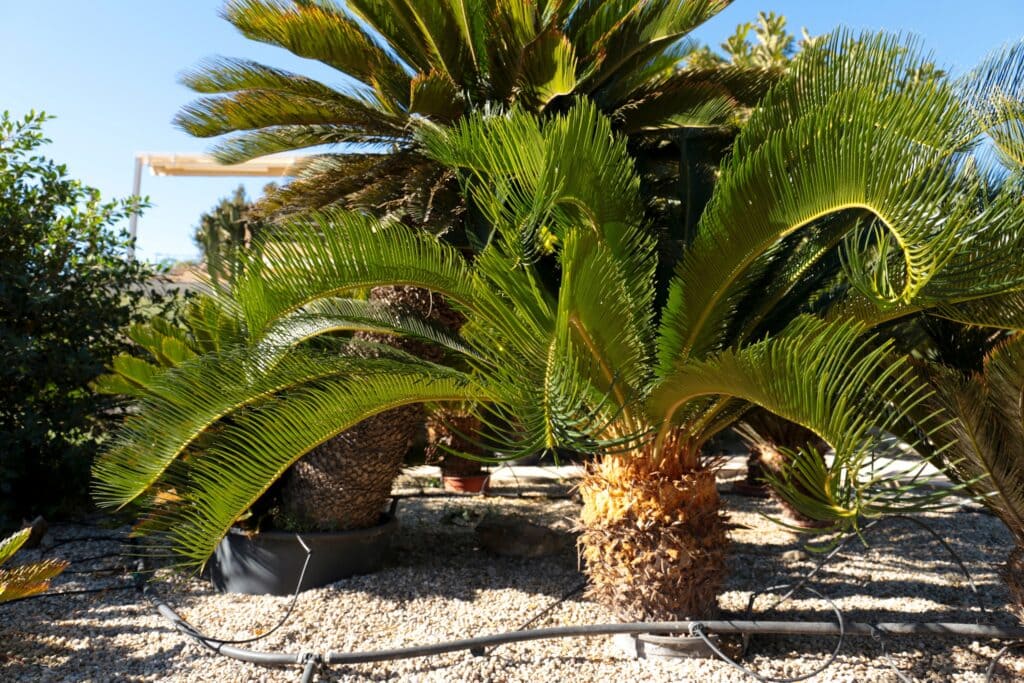
Cycas Revoluta
Fern-Palm
The Fern-palm (Cycas revoluta) is not a palm tree, although it may look like one; it is in fact a descendant of an ancient plant that already existed in the time of the dinosaurs. Its short trunk and stiff, feather-shaped leaves form a very decorative crown. It is highly prized as an ornamental plant in gardens and also as a houseplant. However, care must be taken: all parts of the plant are toxic if ingested, particularly for pets.
India
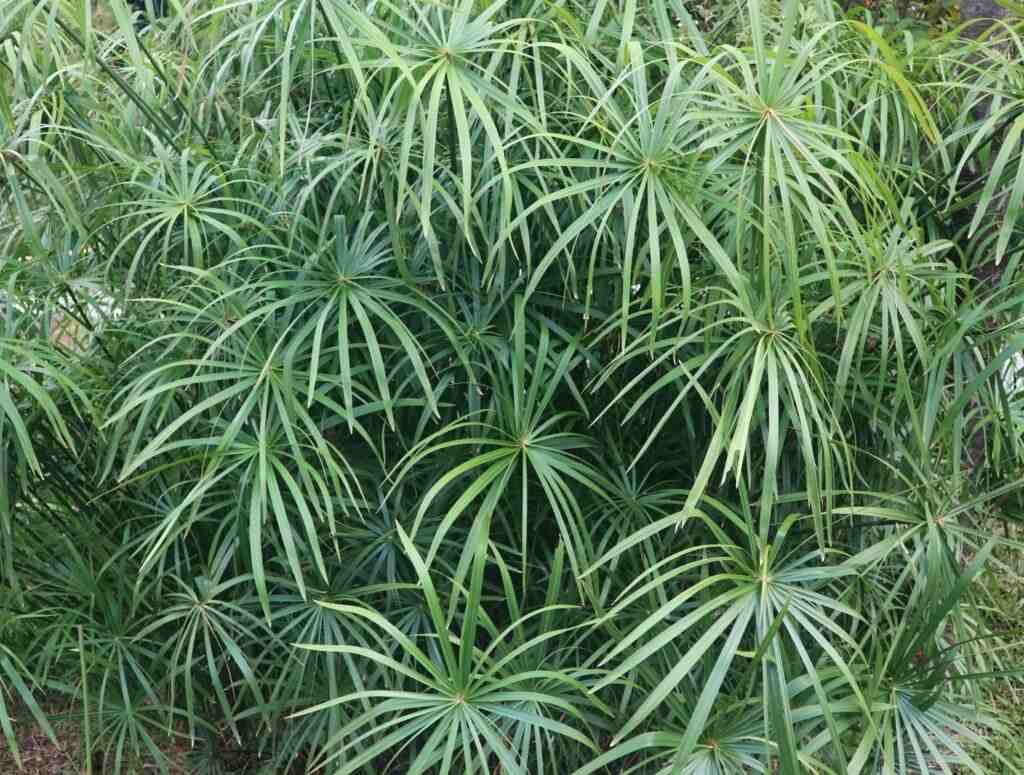
Cyperus Alternifolius
Umbrella Papyrus
Cyperus alternifolius, from Madagascar, has tall stems ending in leaves arranged like the spokes of an umbrella. It grows well in permanently moist pots or even in water, making it ideal for ponds or damp patios. Very easy to propagate.
Madagascar
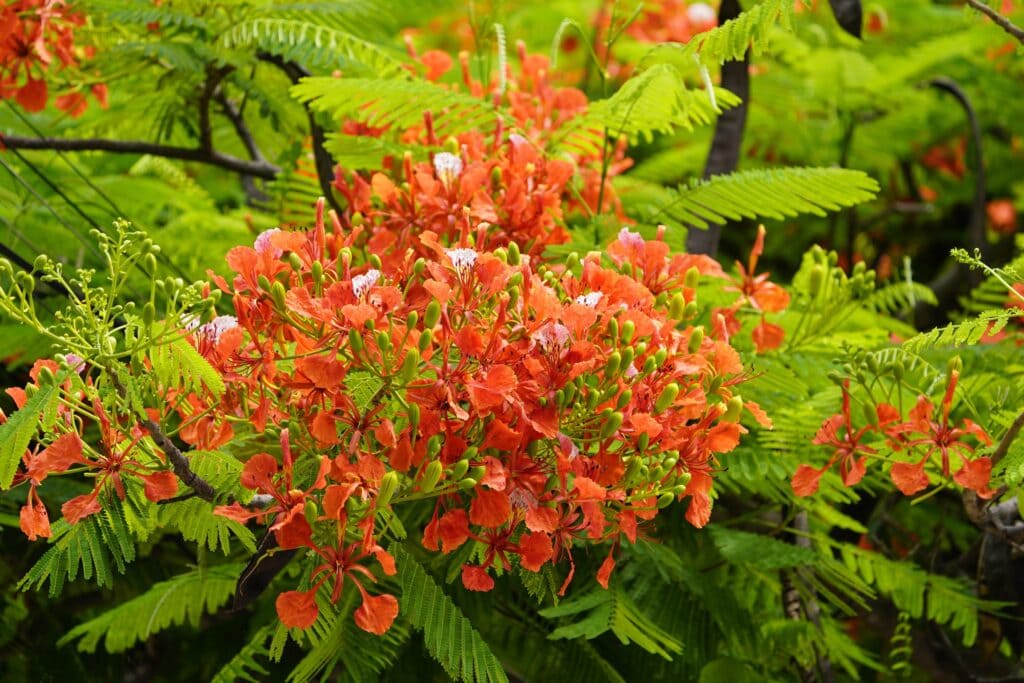
Delonix Regia
Flamboyant
The Flamboyant (Delonix regia) is one of the most spectacular trees in the world. In summer it is covered with bright red or orange flowers that contrast with its vivid green foliage. It grows to a height of 8–12 metres and provides ample shade. Native to Madagascar, it is very popular in tropical regions and is a symbol of vitality and joy.
Madagascar
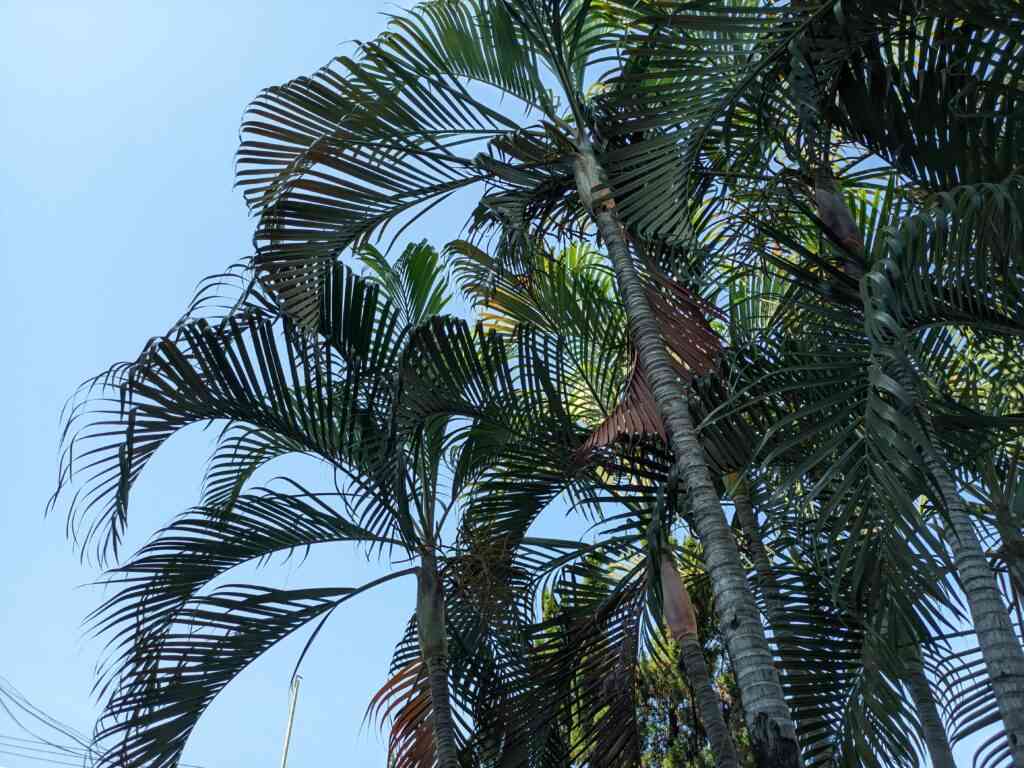
Dypsis Lutescens
Golden Cane Palm
The Golden cane palm (Dypsis lutescens) is native to Madagascar and one of the most popular plants in gardens and indoor spaces. It grows in clusters of slender stems reminiscent of bamboo. Its long, arched leaves give it a fresh, tropical feel. It adapts very well to both pots and outdoor environments in warm climates.
Madagascar
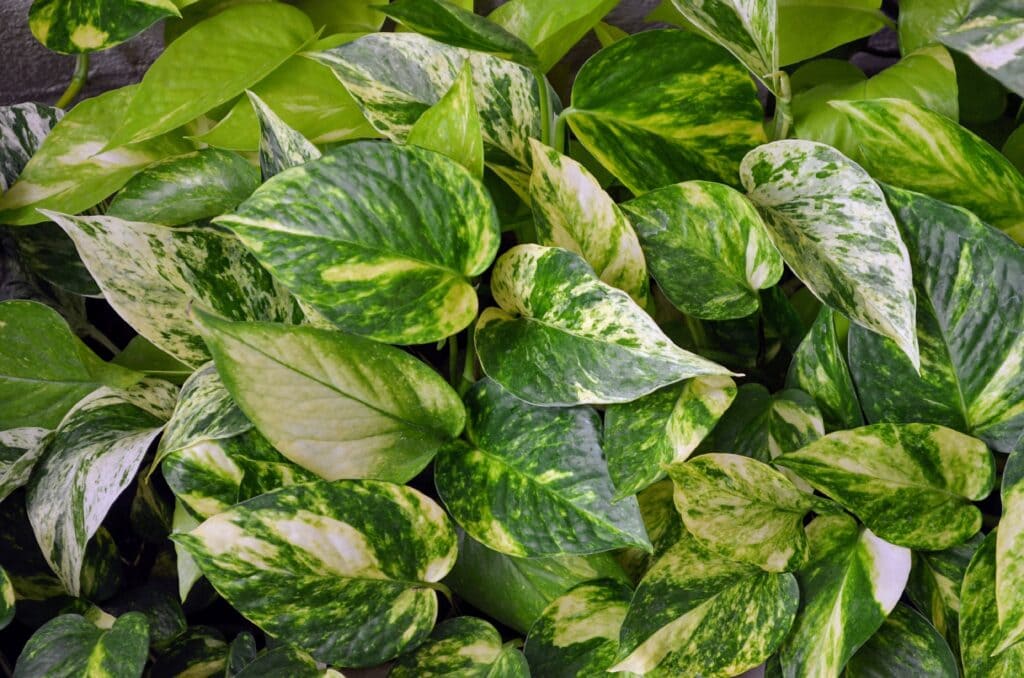
Epipremnum Aureum
Golden Pothos
Golden pothos (Epipremnum aureum) is one of the world’s most beloved indoor plants. Its long vines, with heart-shaped green leaves sometimes marbled with yellow or white, can climb several metres if given support. It is very hardy and requires almost no care, making it perfect for hotels and homes. It also helps purify the air in enclosed spaces.
Tropical
Erythrina Crista-Galli
Coral Tree
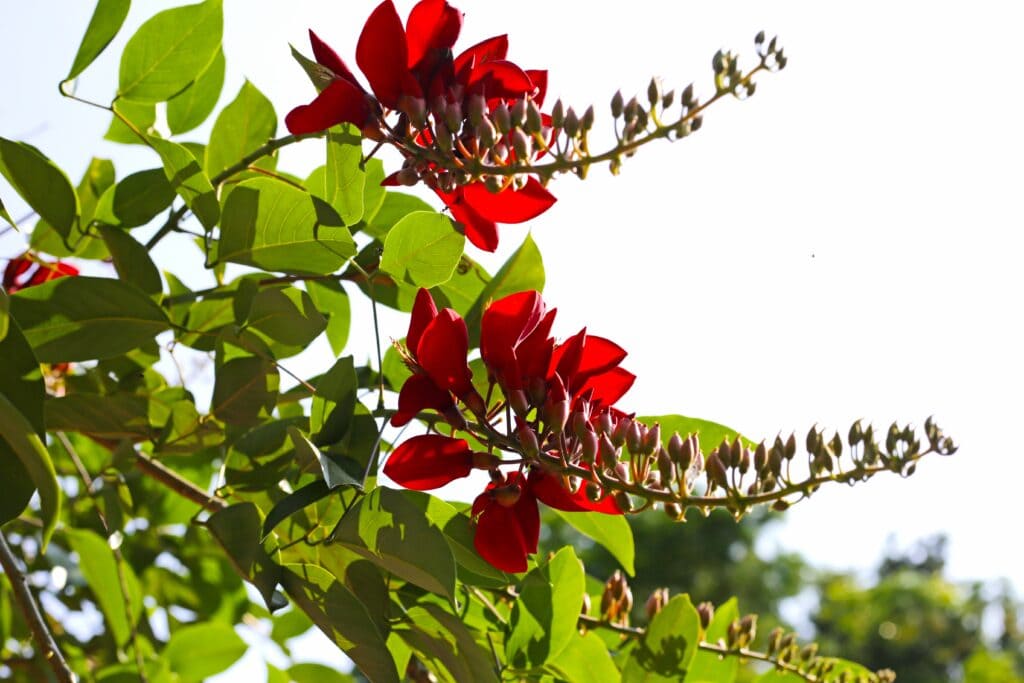
The Coral tree (Erythrina crista-galli) is native to South America and is the national flower of Argentina and Uruguay. Its intense red flowers, which look like small flames, bloom between spring and summer, attracting birds and butterflies. Medium in size, it reaches about 10 metres and is cultivated for the beauty of its flowers, which transform any garden into a spectacle.
South Africa
Euphorbia Milii
Crown Of Thorns
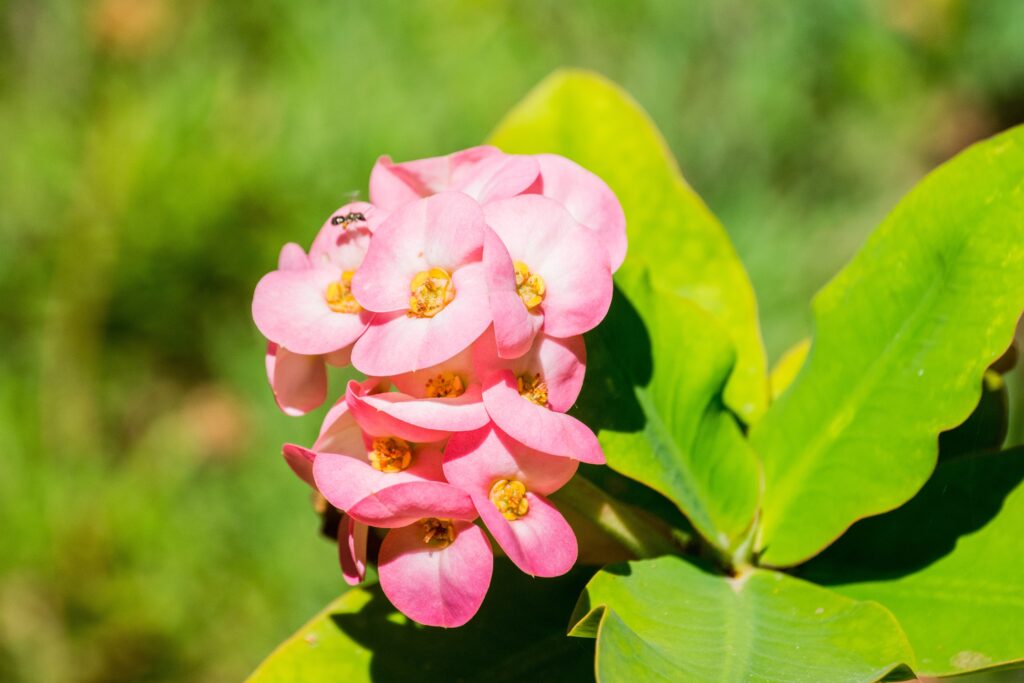
The Crown of thorns (Euphorbia milii) is a shrub native to Madagascar, highly prized for its red flowers that contrast with its thorny stems. It can reach 1.5 metres in height and flowers almost all year round if it gets enough sun. Its name refers to the crown of thorns in Christian tradition. Like other euphorbias, it contains an irritating white latex, so contact with the skin and eyes should be avoided.
Madagascar
Farfugium Japonicum
Leopard Plant
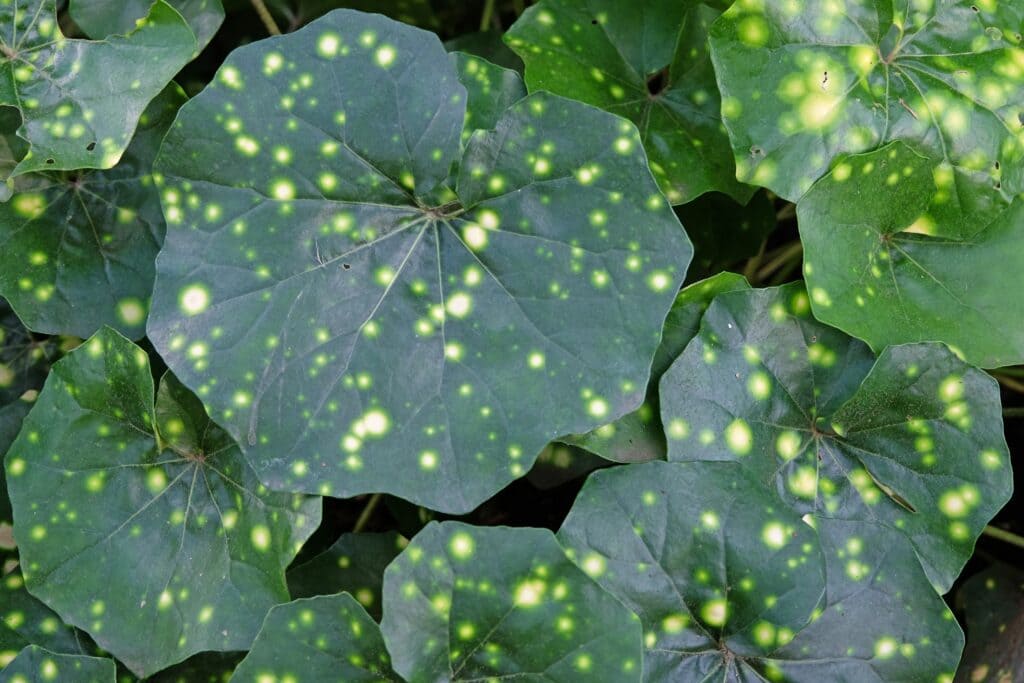
Farfugium japonicum comes from Japan and Korea. Its large, rounded leaves, sometimes speckled with yellow, make it a decorative choice for shady gardens. In autumn it produces tall stems with yellow flowers. It is ideal for damp rockeries and cool corners.
Japan
FICUS BENJAMINA
Weeping Fig
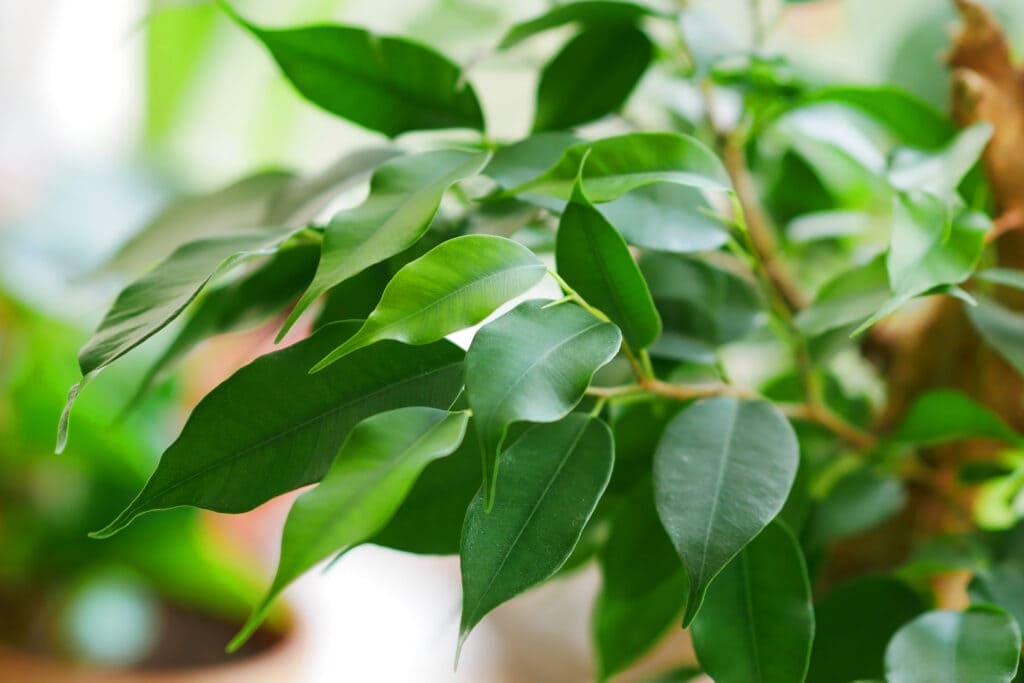
Ficus benjamina is an elegant tree, very popular both indoors and in parks. It can reach 15 metres, with drooping branches and small, shiny, deep green leaves. In spring it sprouts vigorously, renewing its foliage with lighter shades that contrast with the mature leaves. It is native to Asia and Oceania, and in Bangkok it is considered the official tree of the city.
Southeast Asia
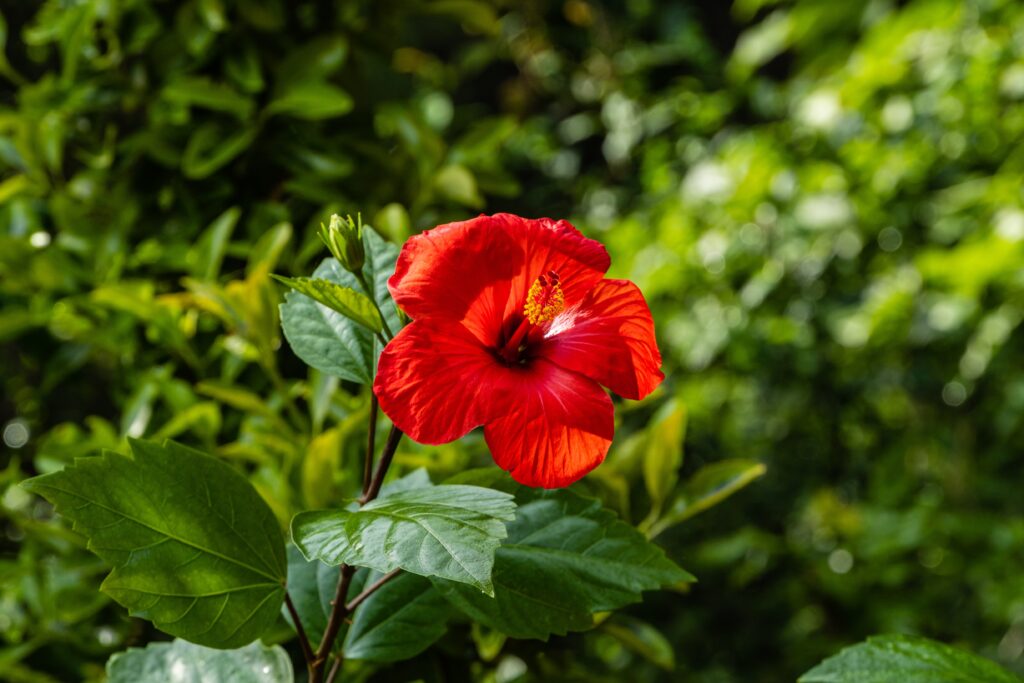
Hibiscus Rosa-Sinensis
Hibiscus
Hibiscus rosa-sinensis is a shrub 2–5 metres tall, popular in the Canary Islands and other warm regions. Its large flowers, ranging in colour from white to deep red, are a symbol of the exotic. In addition to its ornamental value, some varieties are used in cooking, cosmetics and medicine.
Pacific
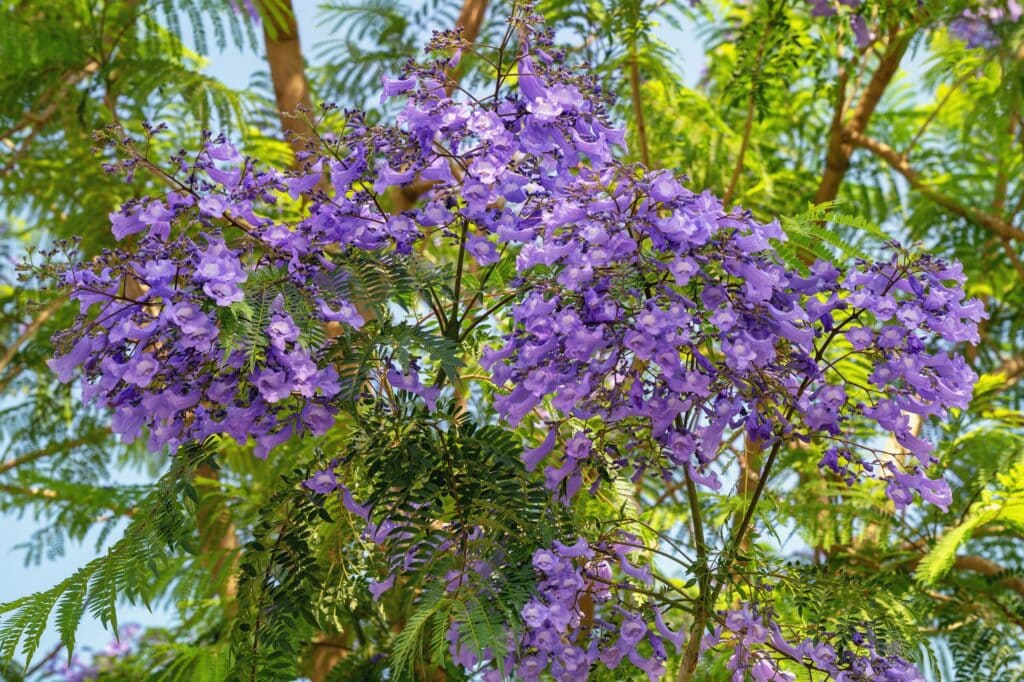
Jacaranda Mimosifolia
Jacaranda
Jacaranda mimosifolia is a tree that grows up to 15 metres tall, renowned for covering itself in spring with blue-violet flowers that fall like a shower of petals. Native to South America, it can live for over 100 years and provides light shade. Its castanet-shaped seed pods are very distinctive.
Brazil
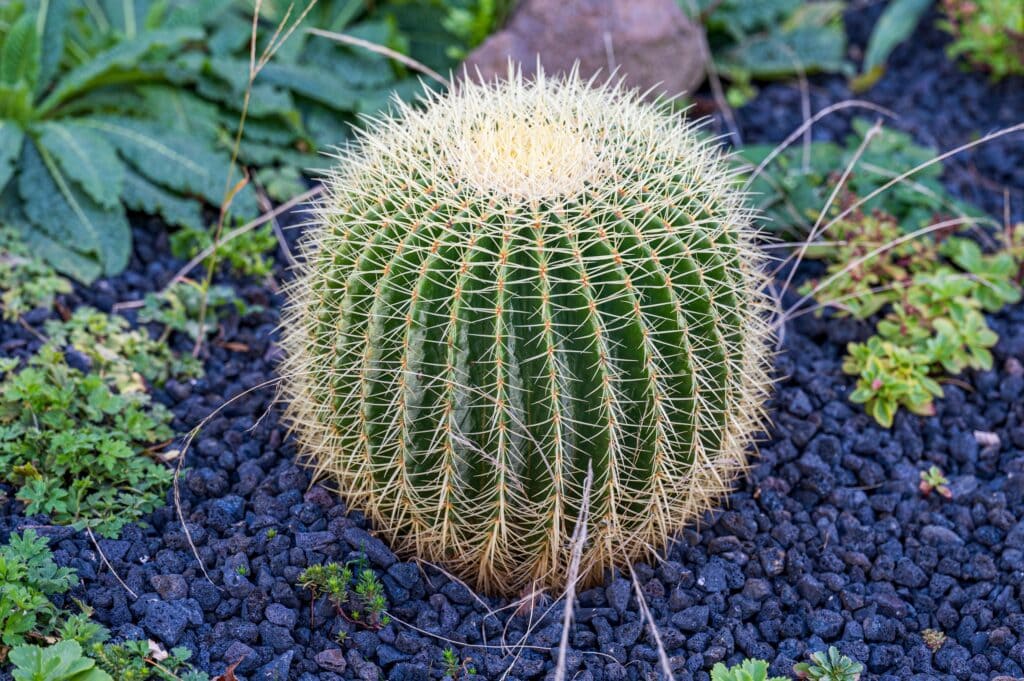
Kroenleinia Grusonii
Golden Barrel Cactus
The Golden barrel cactus (Echinocactus grusonii), also called mother-in-law’s cushion, is one of the most famous cacti in the world. Round and covered with golden spines, it can live for over 100 years. Although it grows slowly, in the wild it can exceed one metre in height. Its yellow flowers appear in summer, but only on mature specimens. It is native to Mexico and is endangered in its natural habitat, which is why it is so highly prized in gardens and collections.
Mexico
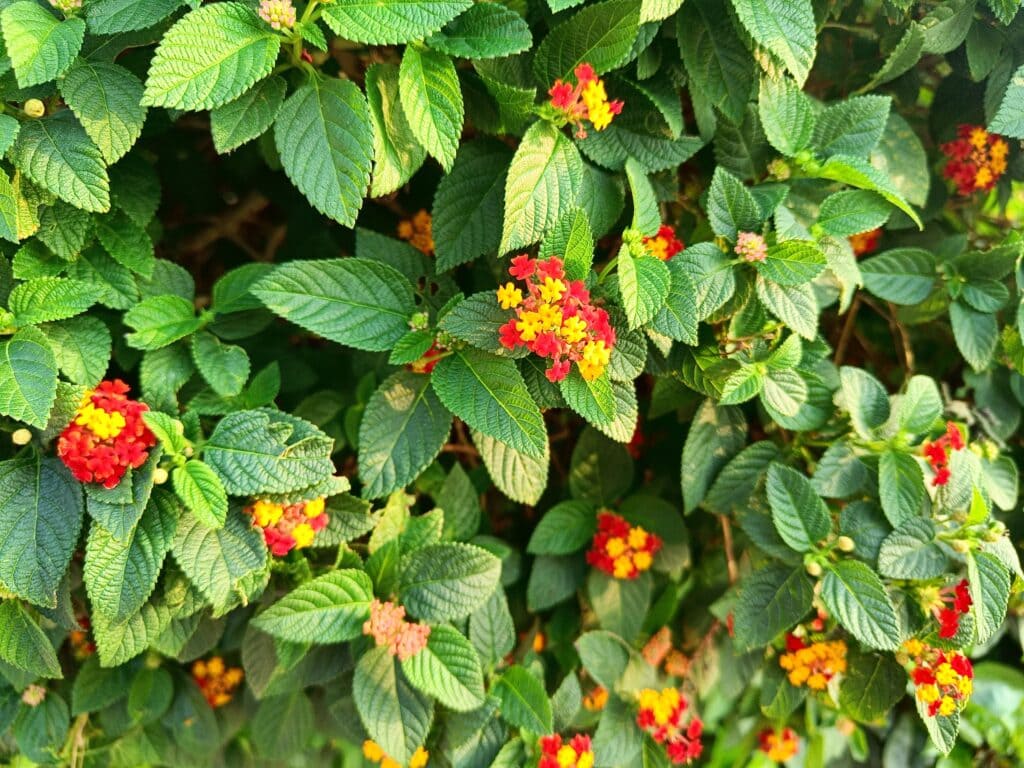
Lantana Camara
Lantana
Lantana (Lantana camara) is a flowering shrub whose flowers change from yellow to red as they mature, reminiscent of the colours of the Spanish flag. It flowers almost all year round and attracts butterflies and bees. Although widely used in gardening, in some tropical countries it is considered invasive. Its ripe fruits are edible, but when green they are toxic.
South America
Livistona Chinensis
Livistona Fan Palm
Livistona chinensis, or Chinese fan palm, is a highly ornamental species due to its large fan-shaped leaves, which can measure over a metre in length. Slow growing, it reaches up to 9 metres and develops very decorative bluish fruits. It is native to East Asia and is widely cultivated in gardens for its elegant appearance.
Asia
Monstera Deliciosa
Split-Leaf Philodendron
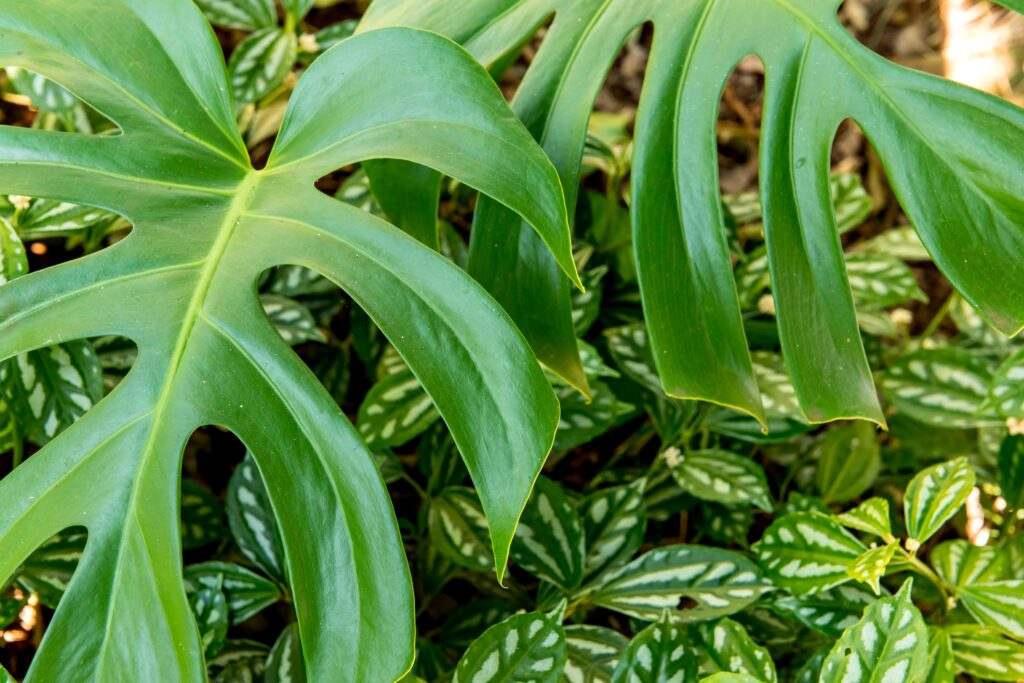
Monstera deliciosa, native to tropical America, is a famous houseplant. Its large green leaves, with cuts and holes, give it an exotic appearance. In nature it can climb up to 20 metres. Its fruit, tasting of pineapple, is edible only when fully ripe.
Mexico
NERIUM OLEANDER
Oleander
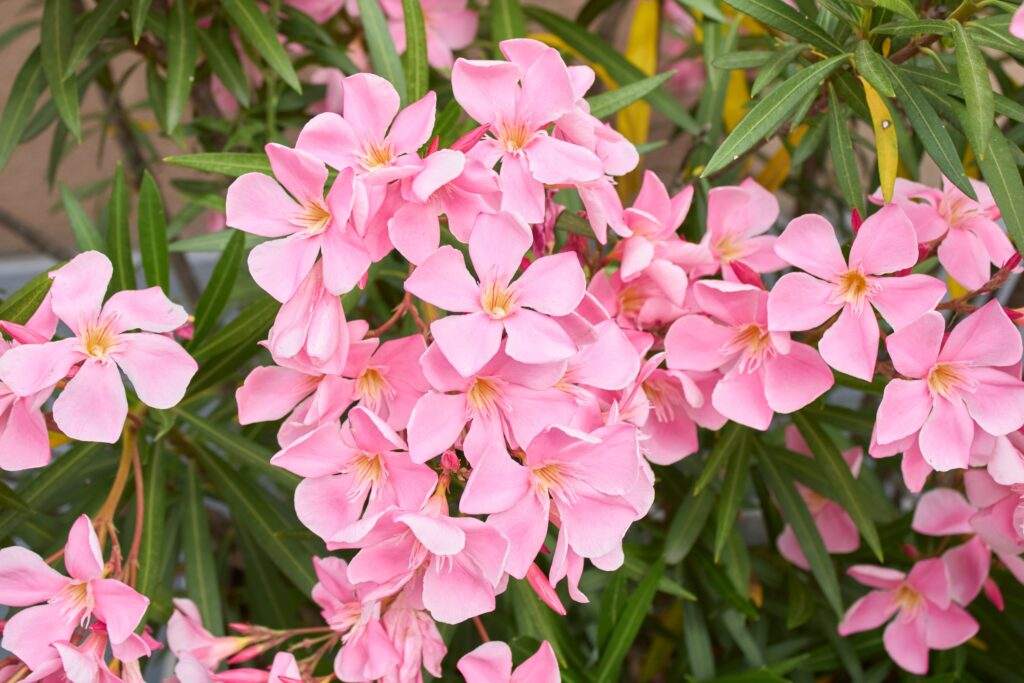
The Oleander (Nerium oleander) is a shrub that grows up to 6 metres tall and brightens up parks and gardens with its pink, white or red flowers for much of the year. Resistant to sun and drought, it is very
Mediterranean
Odontonema Tubeaforme
Fire Spark
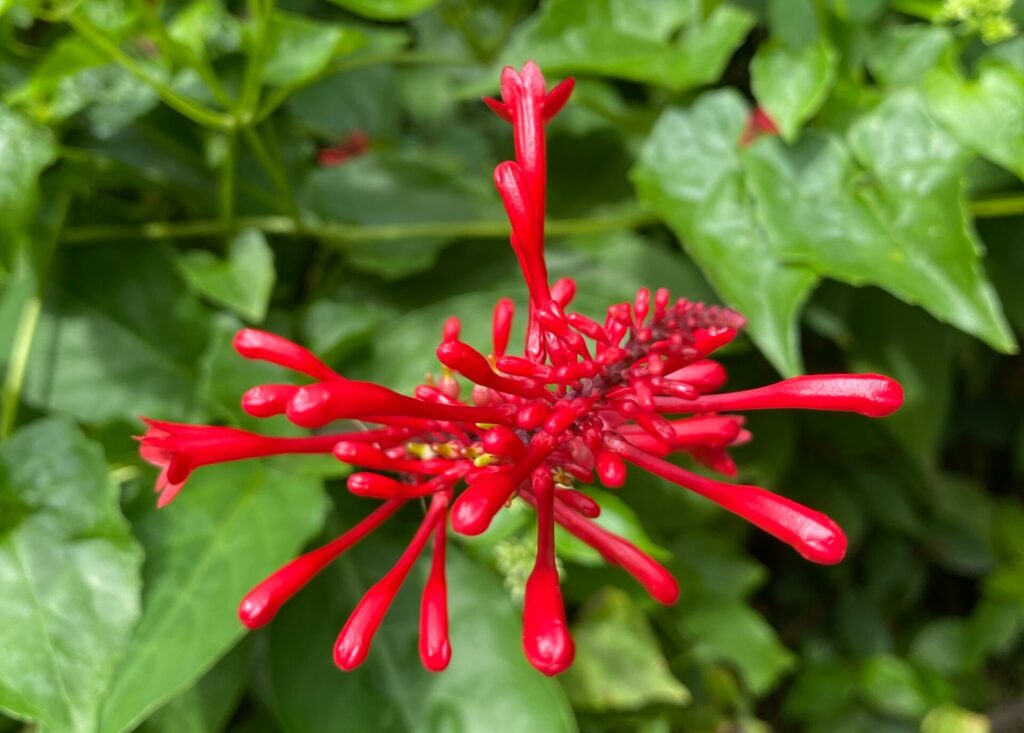
The Fire spark (Odontonema tubaeforme) is a shrub that grows up to 2 metres tall with intense red flowers that appear in long clusters. Its flowering, which usually occurs in autumn, attracts butterflies and hummingbirds, creating a spectacle of life and colour. It comes from Mexico and Central America and adapts very well to warm, sunny gardens.
Mexico
Pachypodium Lamerei
Madagascar Palm
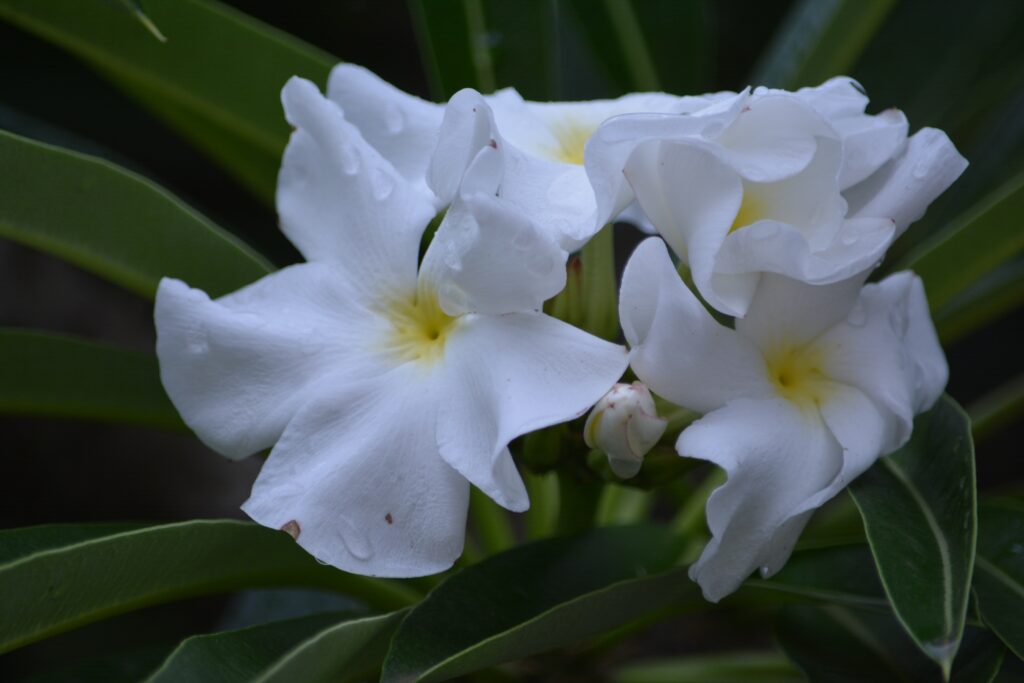
Pachypodium lamerei is not a true palm but a succulent. Its thorny trunk can reach 8 metres, with green leaves and highly fragrant white flowers sprouting from the top. With its sculptural appearance, it is ideal as a solitary specimen in warm gardens.
Madagascar
Palmera Real
Royal Palm
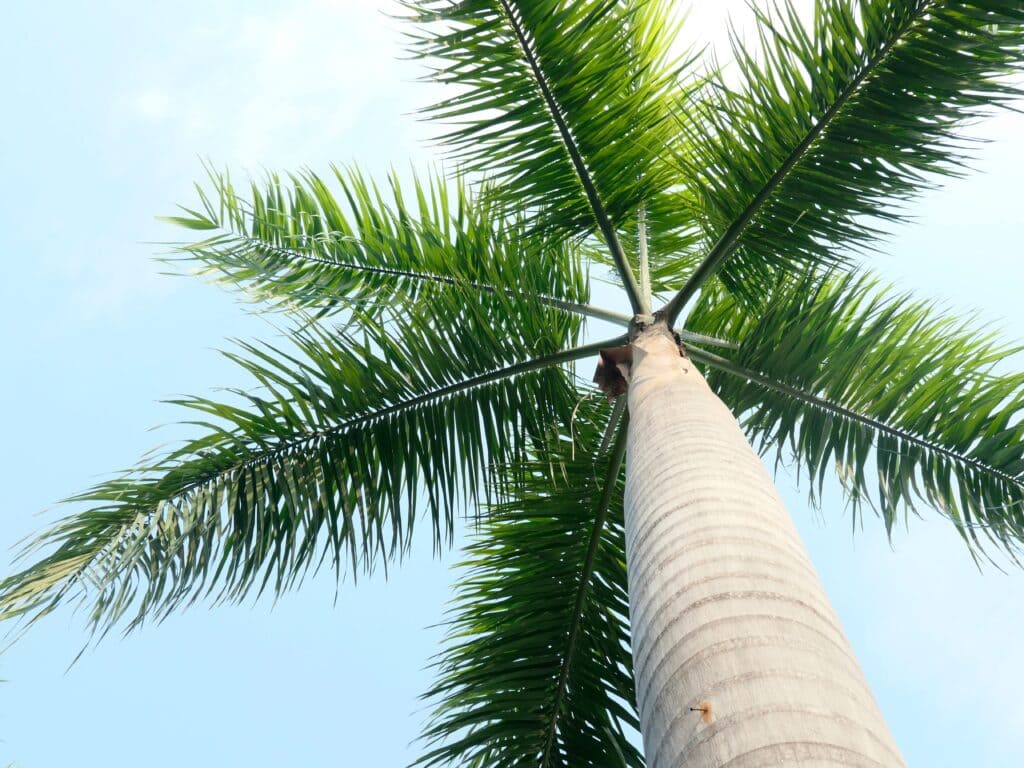
The Royal palm (Roystonea regia) can grow up to 30 metres tall and is notable for its smooth, light grey trunk, as straight as a column. It is the national tree of Cuba, where it dominates the rural landscape. Its long, arched leaves form a majestic crown that gives it its “royal” appearance. It is also cultivated in many tropical regions for its beauty and resilience.
Cuba
Pandanus Utilis
Common Screw Pine
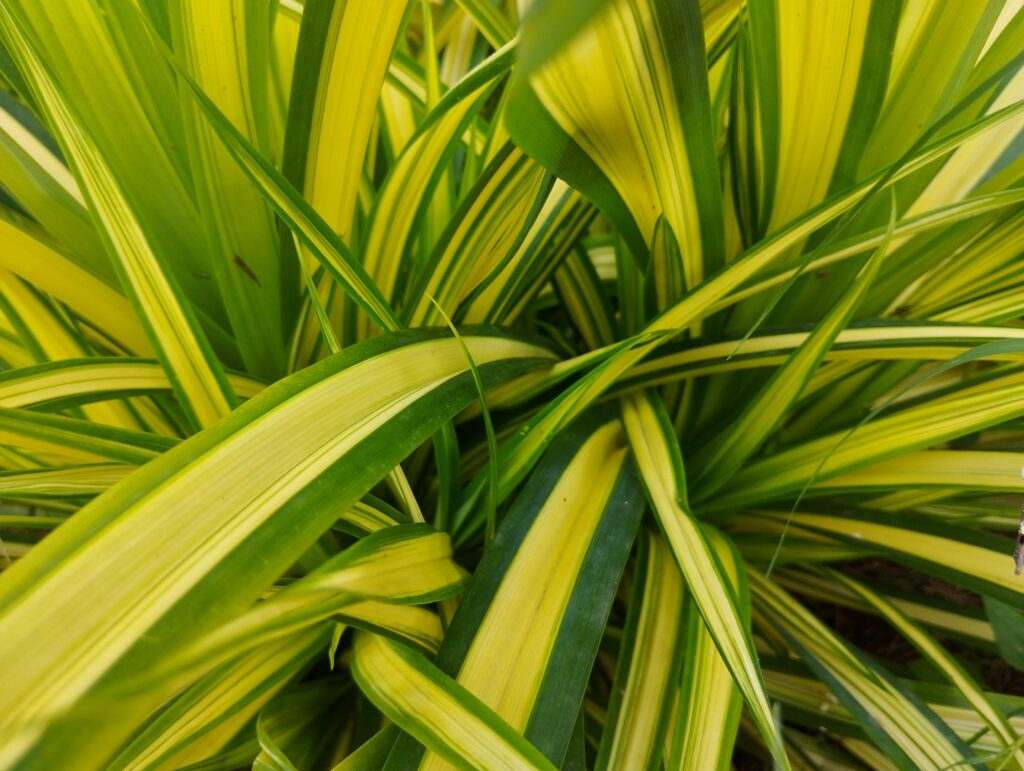
The genus Pandanus comprises more than 600 tropical species, widely found in Oceania. Its aerial roots form striking structures that support the trunk. Together with the coconut palm, the screw pine is considered one of the most useful trees of the Pacific, as its leaves, fruits and trunk have many traditional uses.
Madagascar
Phoenix Roebelenii
Pygmy Date Palm
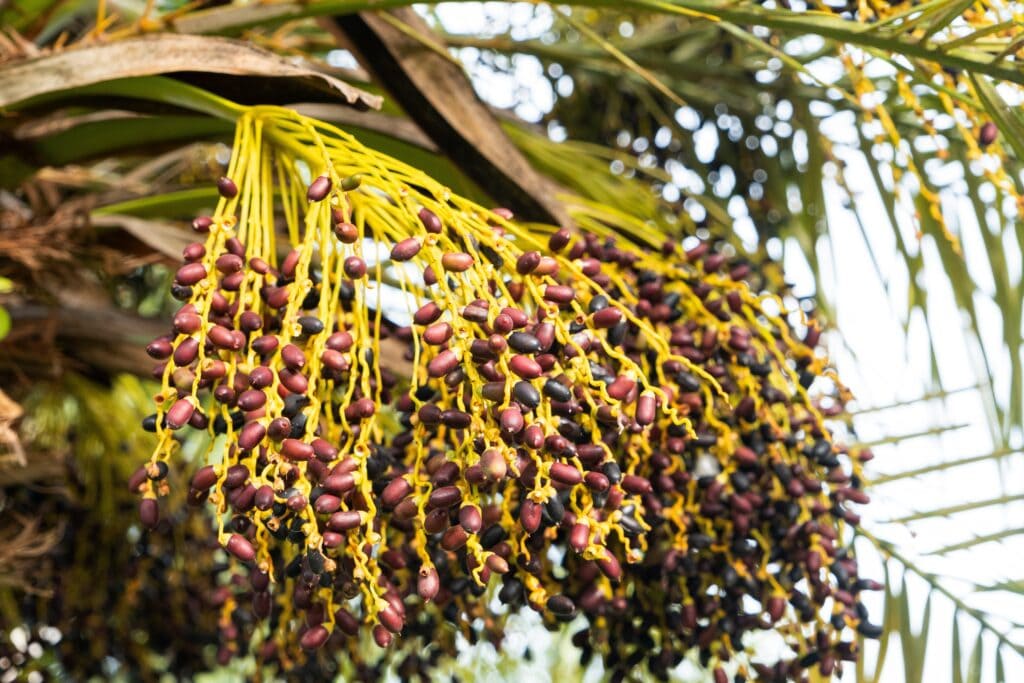
Phoenix roebelenii is a small, delicate palm tree, ideal for gardens and indoor spaces. Its trunk generally does not exceed 2 metres, although it can reach 5 metres with the crown of leaves. Its fronds are green and arched, and in summer it produces yellowish flowers followed by small, dark, edible dates. Native to Southeast Asia, it is perfect for adding a tropical feel in a small space.
Vietnam
Phyllostachys Nigra
Black Bamboo
Phyllostachys nigra, native to Asia, is a bamboo that grows up to 8 metres tall and is striking for its dark, almost black stems. Valued in oriental gardens, it is frost-resistant and is also used in crafts and construction.
China
Plumbago Capensis
Blue Plumbago
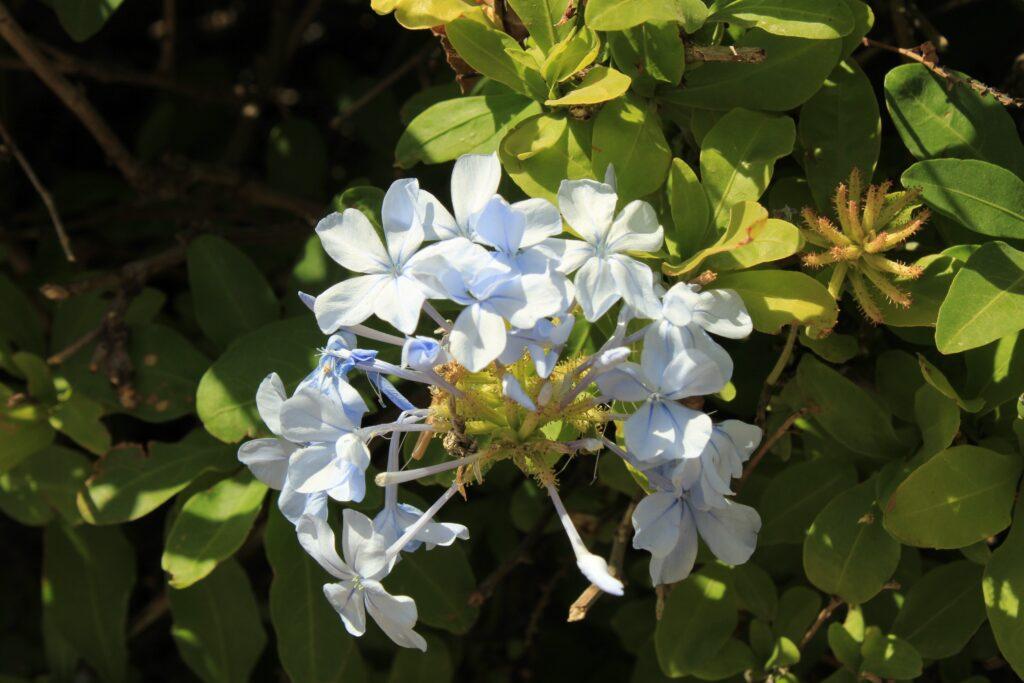
Plumbago auriculata, native to South Africa, is a climbing shrub that can reach 2 metres. It blooms almost all year round, producing clusters of sky-blue flowers. Very easy to care for, it thrives in sunny conditions and is ideal for covering walls or for planting in large pots.
South Africa
Plumeria Rubra
Frangipani
The Frangipani (Plumeria rubra) is famous for its sweet, soft, fragrant flowers in shades of white, yellow, pink or red. Widely used in garlands in Hawaii, it is also the national flower of Nicaragua. Its flowers are associated with spirituality and joy, and they beautify gardens in all tropical regions of the world.
Caribbean
Polygala Myrtifolia
Myrtle-Leaf Milkwort
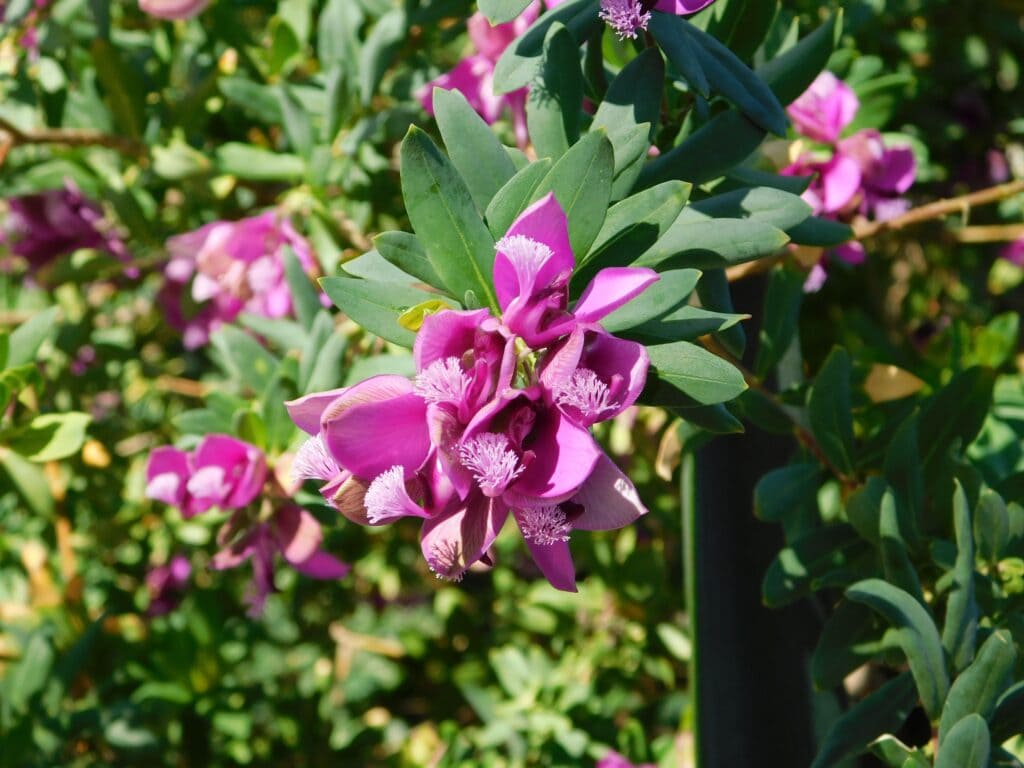
Polygala myrtifolia is an evergreen shrub from South Africa that grows 2–4 metres tall. Its green leaves and violet, butterfly-shaped flowers make it very ornamental. In mild climates it can flower almost all year round. In its homeland it is also believed to have medicinal properties.
South Africa
Russelia Equisetiformis
Firecracker Plant
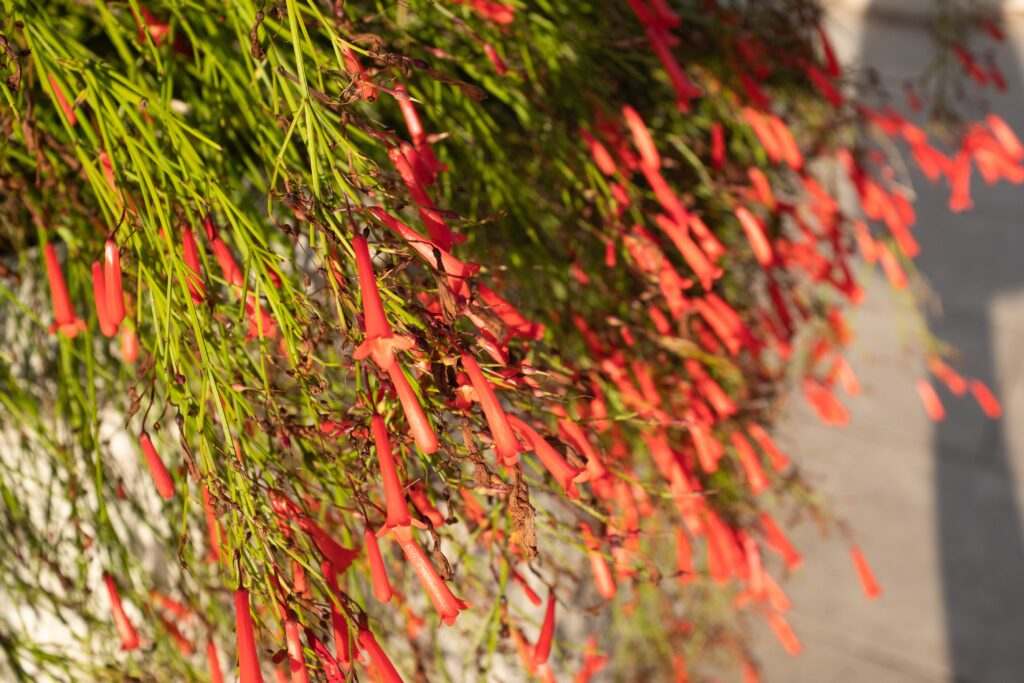
Russelia equisetiformis, from Mexico, is a shrub with delicate, cascading branches covered in small red flowers. Light in appearance and almost always in bloom, it attracts hummingbirds and butterflies. Ideal for hanging baskets or sunny rockeries.
Mexico
Schefflera Actinophylla
Umbrella Tree
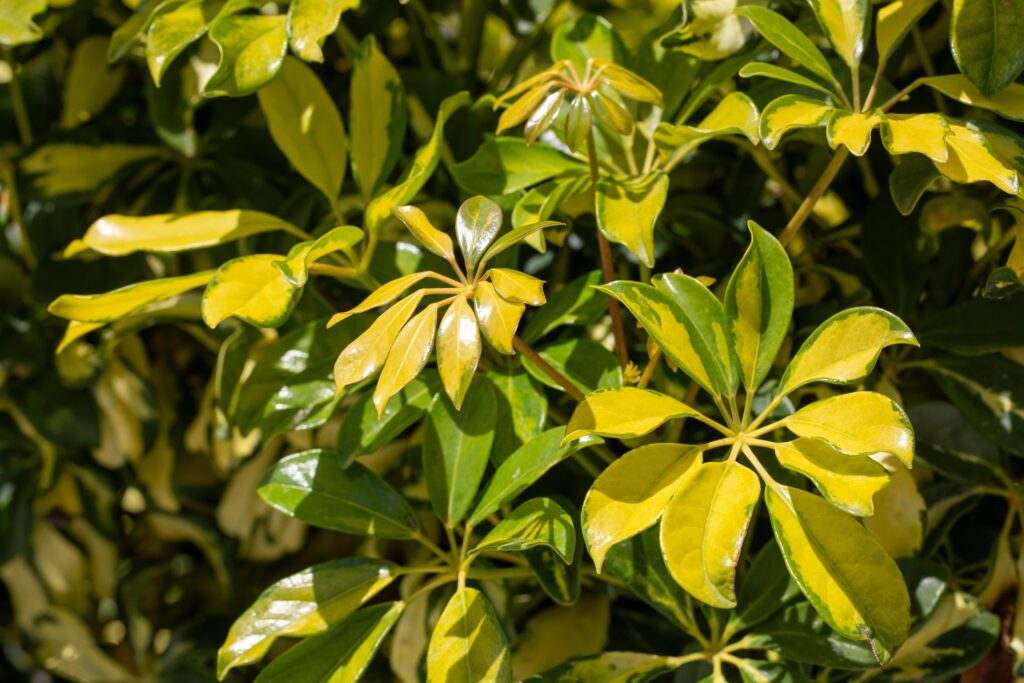
The Umbrella tree (Schefflera actinophylla) comes from Australia and Papua New Guinea. Its large leaves spread like an umbrella, and in summer it produces long spikes of nectar-rich red flowers that attract birds. It can grow up to 15 metres tall and is valued in large gardens for its exotic appearance. In some tropical areas, however, it behaves like an invasive species.
Papua New Guinea
Schinus Molle
Peruvian Peppertree
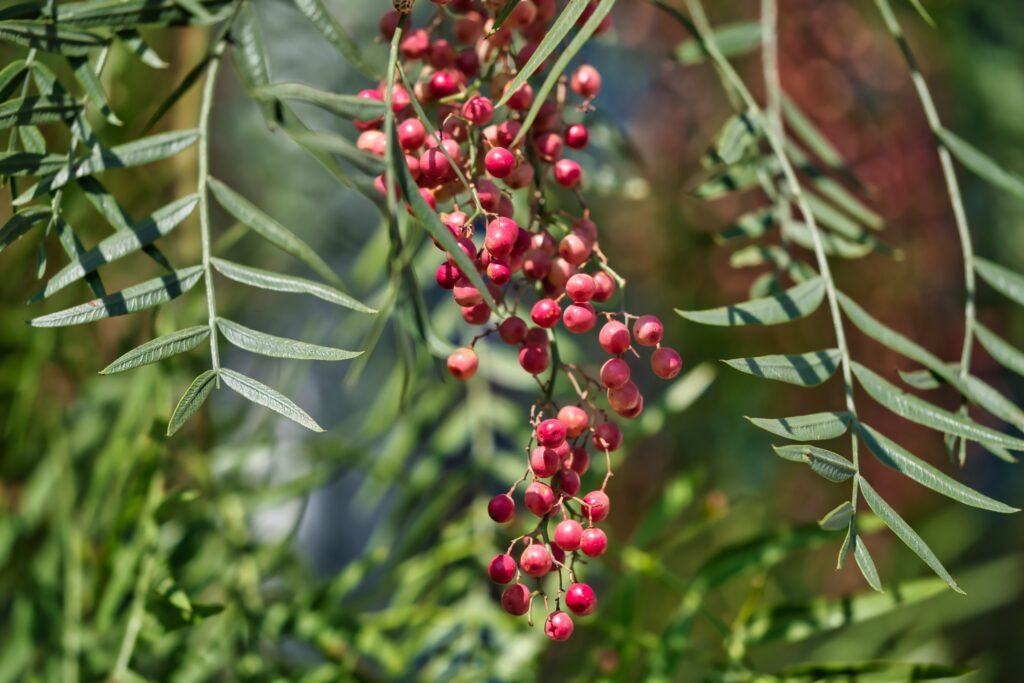
Schinus molle, known as the Peruvian peppertree, can grow up to 15 metres tall. Its drooping branches and fine foliage provide a light, fragrant shade. The fruits are small reddish berries resembling peppercorns. It is widely used as an ornamental tree and is often planted along streets and squares.
South America
Schinus Terebinthifolia
Brazilian Peppertree
Schinus terebinthifolius is a tree 7–10 metres tall, native to South America. It produces clusters of bright red fruits, known as pink pepper. Although sometimes used as a spice, they should be consumed only in moderation. Its glossy foliage makes it attractive, but in many regions it is considered invasive.
Brazil
Spathodea Campanulata
African Tulip Tree
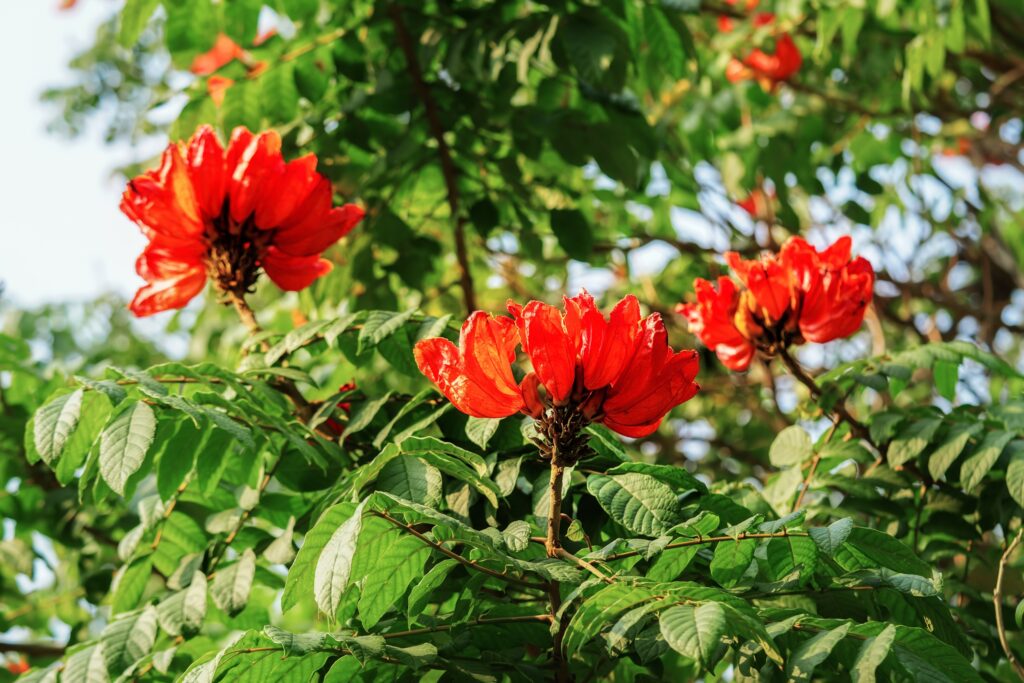
The African tulip tree (Spathodea campanulata) surprises with its large red or orange flowers that look like flames. Native to tropical Africa, it grows up to 20 metres tall and provides generous shade. Its cup-shaped flowers collect rainwater, attracting birds and butterflies. It is highly ornamental, although in some regions it behaves as an invasive species.
Gold Coast of Africa
Strelitzia Alba
White Bird Of Paradise
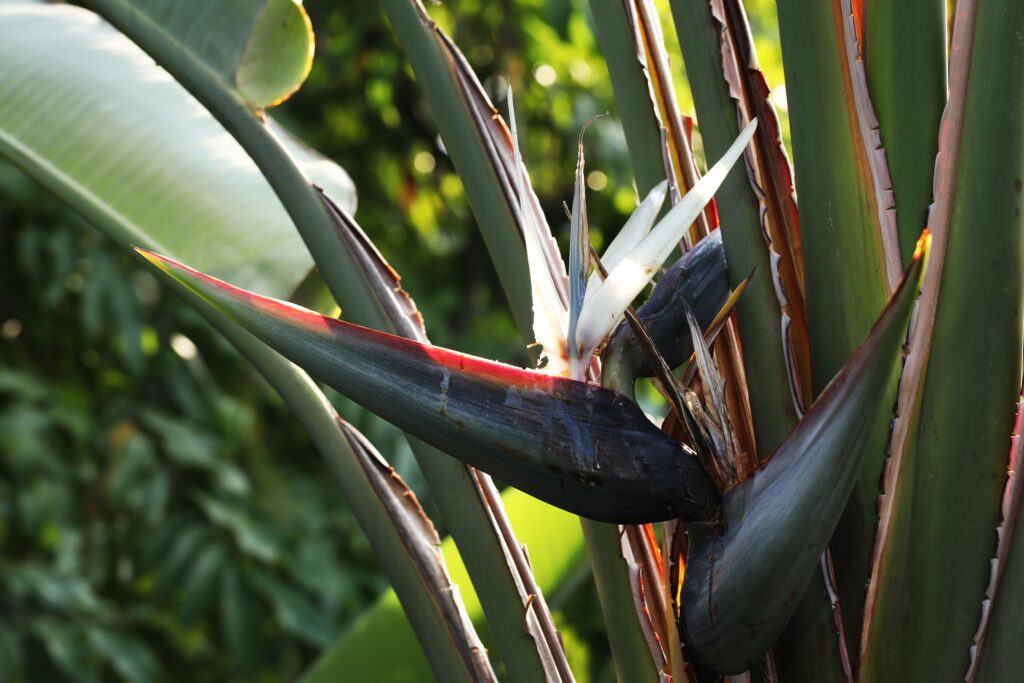
Strelitzia alba, known as the White Bird of Paradise, is an imposing plant that can reach up to 10 metres in height. Its large, elongated leaves form an elegant crown, and its white flowers, very different from the colourful Strelitzia reginae, appear almost all year round. It comes from South Africa, where it grows in humid forests and riverbanks. In the Canary Islands, it is highly prized as an ornamental plant.
South Africa
Strelitzia Reginae
Bird Of Paradise
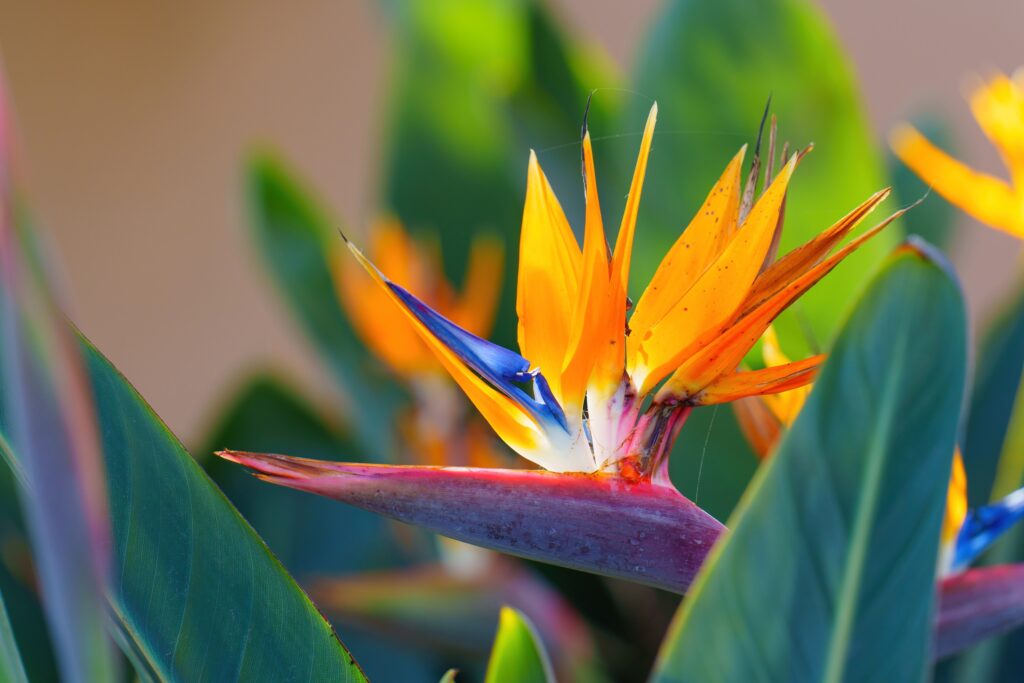
Strelitzia reginae is one of the most iconic plants of the Canary Islands. Its orange and blue flowers resemble the head of a tropical bird. Elegant in appearance, it can grow up to 1.5 metres tall and thrives in sunny, mild climates. It is very popular in gardens and also as a cut flower.
South Africa
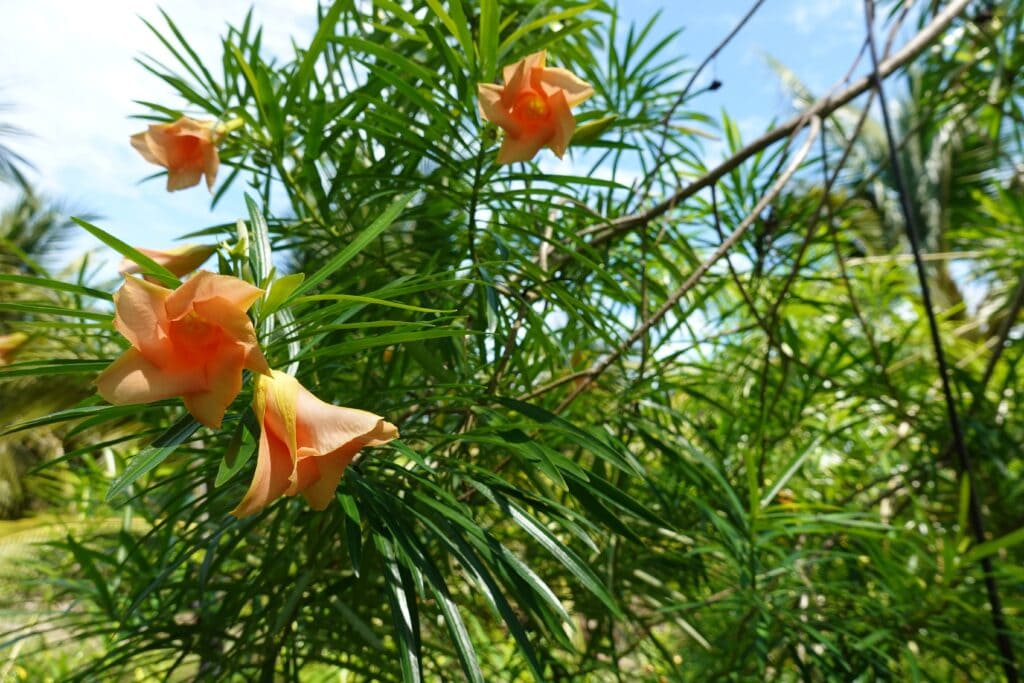
Thevetia Peruviana
Lucky Nut
The Lucky nut (Thevetia peruviana) is a shrub or small tree that can grow up to 8 metres tall. Its yellow trumpet-shaped flowers appear throughout most of the year, filling the landscape with colour. Its fruits are round, first green, then yellow and finally black. Although they have been used in traditional medicine, they contain toxic substances and should not be consumed without supervision.
Tropical America
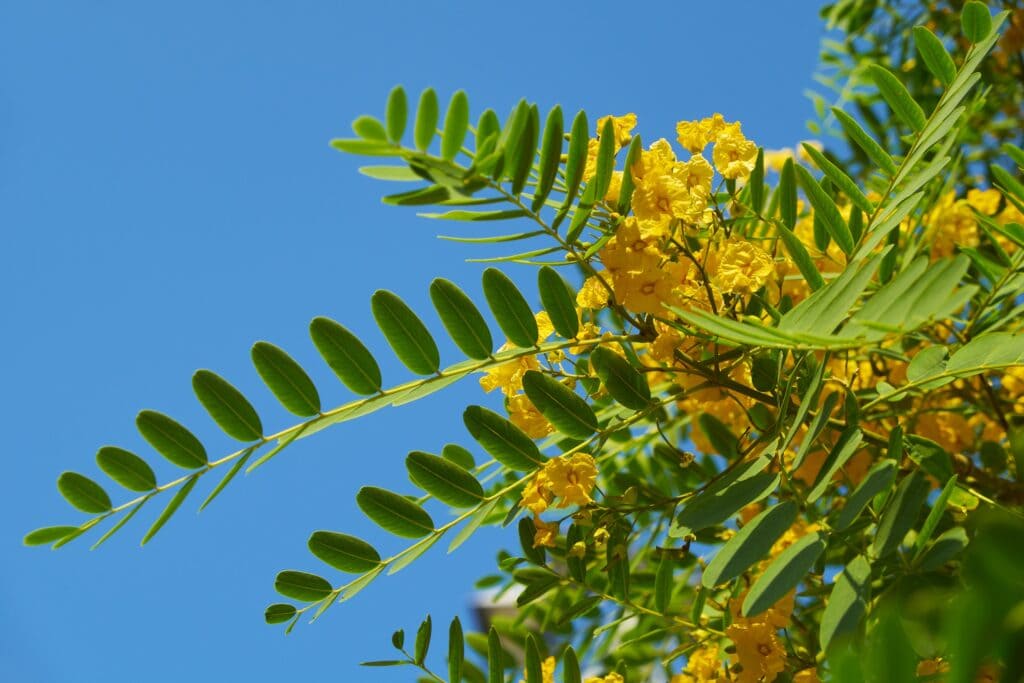
Tipuana Tipu
Rosewood
The Rosewood tree (Tipuana tipu) has a wide, elegant crown and grows up to 18 metres tall. In spring, it is covered with yellow flowers that fall like golden rain, covering the ground with colour. Native to South America, it is highly prized in promenades and parks for its cool shade and its branches that spread out like a large umbrella.
Bolivia
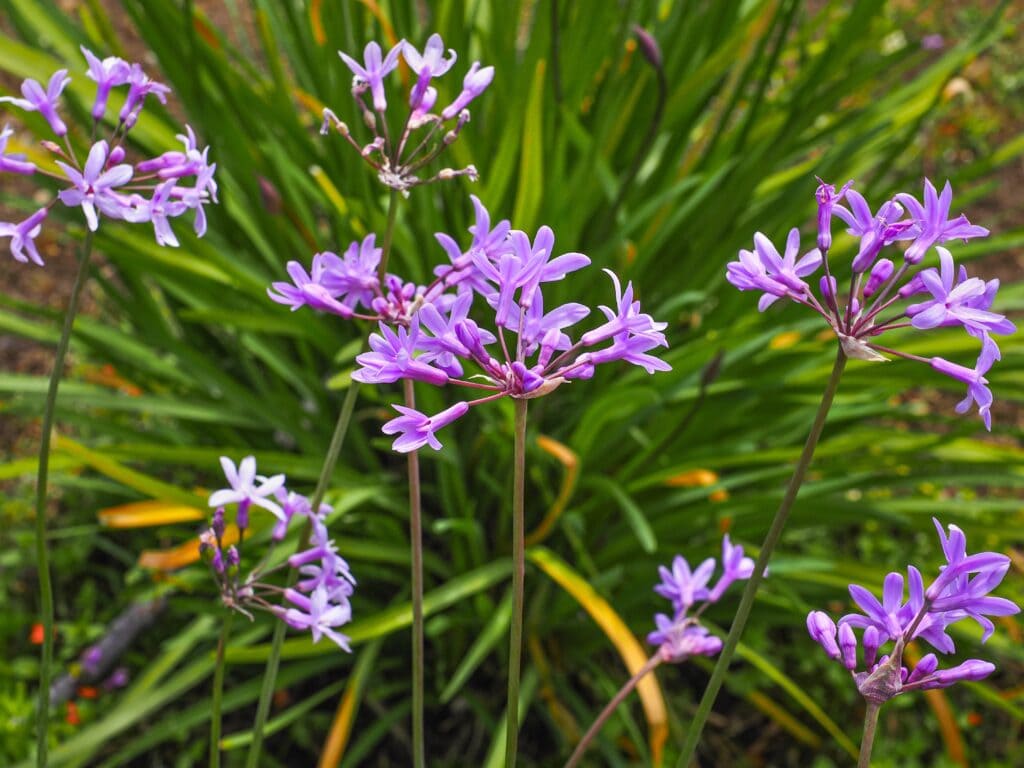
Tulbaghia Violacea
Society Garlic
Tulbaghia violacea, known as society garlic, is a plant from southern Africa that grows up to 70 cm tall. Its long, thin leaves emit a strong garlic-like smell, and in summer it produces clusters of striking lilac flowers. In addition to its ornamental value, it is also used in traditional medicine in its homeland.
Cape Province
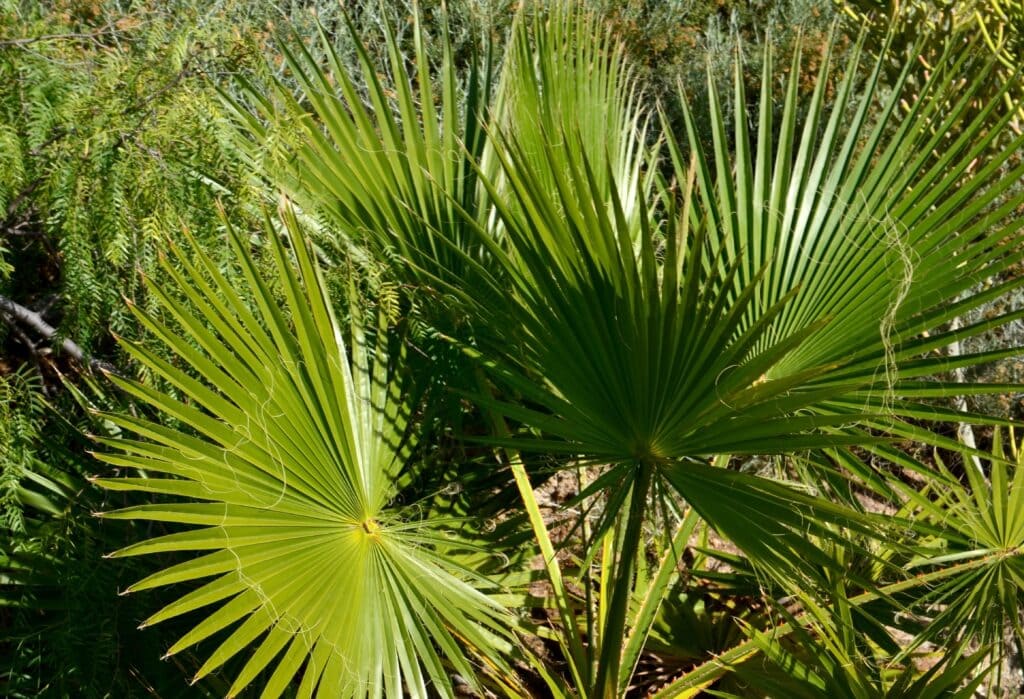
Washingtonia Filifera
California Fan Palm
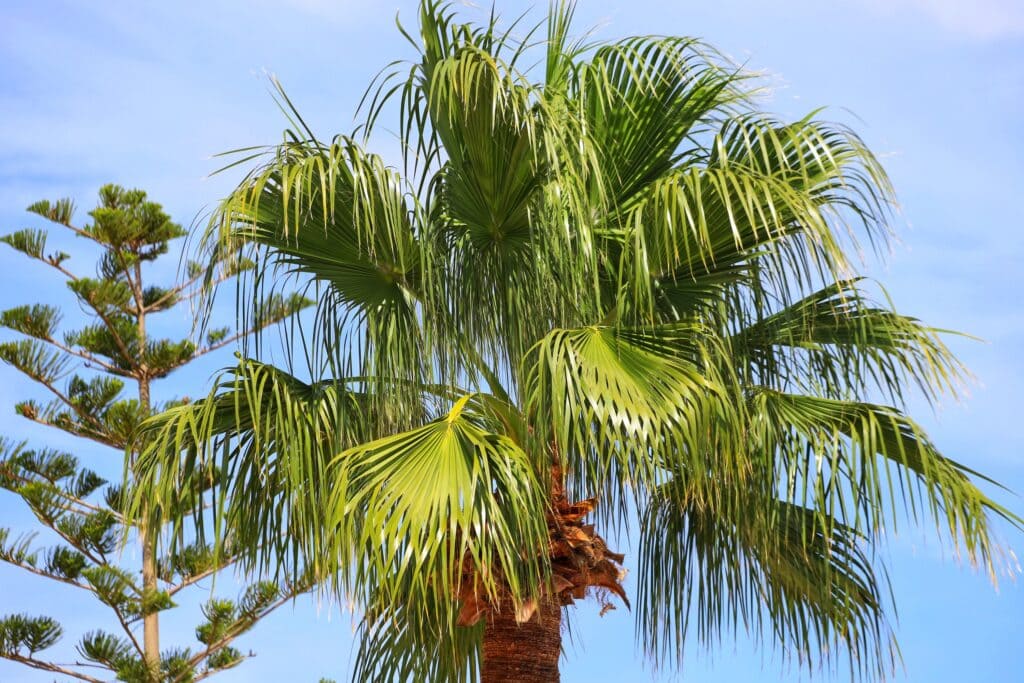
Washingtonia robusta is a slender palm tree that grows up to 30 metres tall and is native to Mexico. Its tall trunk and large fan-shaped leaves make it a popular ornamental tree for avenues and gardens. Young plants display white fibres between the leaves, which disappear as they mature. In the Canary Islands and mainland Spain it is widely planted for its majestic appearance.
California
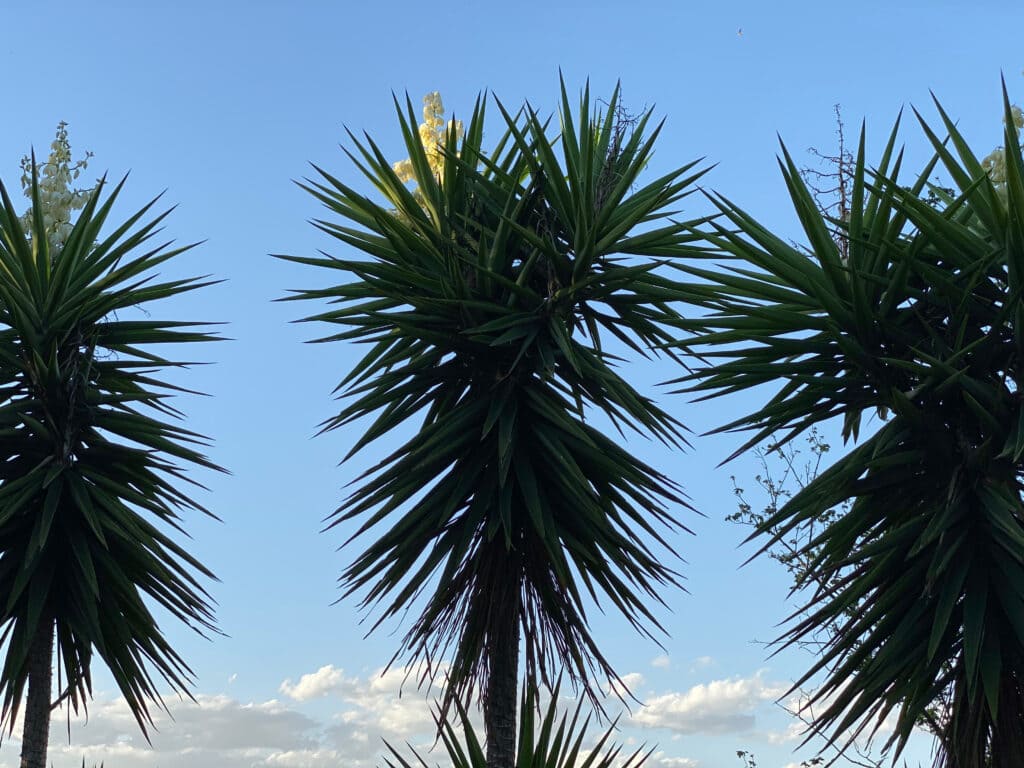
Yucca Elephantipes
Elephant'S Foot Yuca
The Elephant’s foot yucca (Yucca elephantipes) is one of the most prized yuccas because it has no thorns, making it safe and perfect as an ornamental plant. Its thickened base resembles an elephant’s foot, hence its name. It can grow up to 10 metres tall and in summer surprises with large clusters of white bell-shaped flowers. In Central America, its petals and tender shoots are even eaten.
Central America
canarian plants
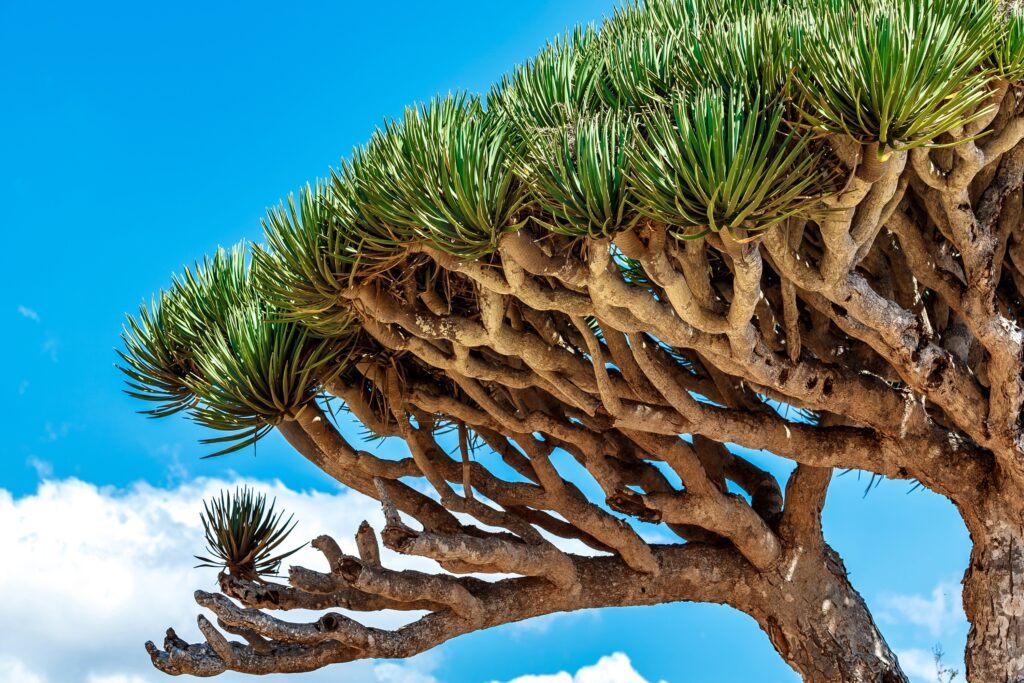
DRACAENA DRACO
Canary Islands Dragon Tree
The Canary Islands dragon tree (Dracaena draco) is one of the best-known symbols of the Canary Islands. Its unique silhouette and red sap, called dragon’s blood, make it a legendary tree. It can live for centuries and grow to a great size, such as the 300-year-old dragon tree of Agalán in La Gomera. Impressive specimens can also be found on La Palma and Tenerife.
ERICA ARBOREA
Tree Heath
Tree heath (Erica arborea) is a shrub or small tree that can grow up to 15 metres tall in the Canary Islands, much taller than in other regions. Its small, numerous white flowers fill the forest with fragrance between spring and summer. It is one of the first plants to repopulate abandoned land and is an essential part of the natural regeneration of the laurel forest.
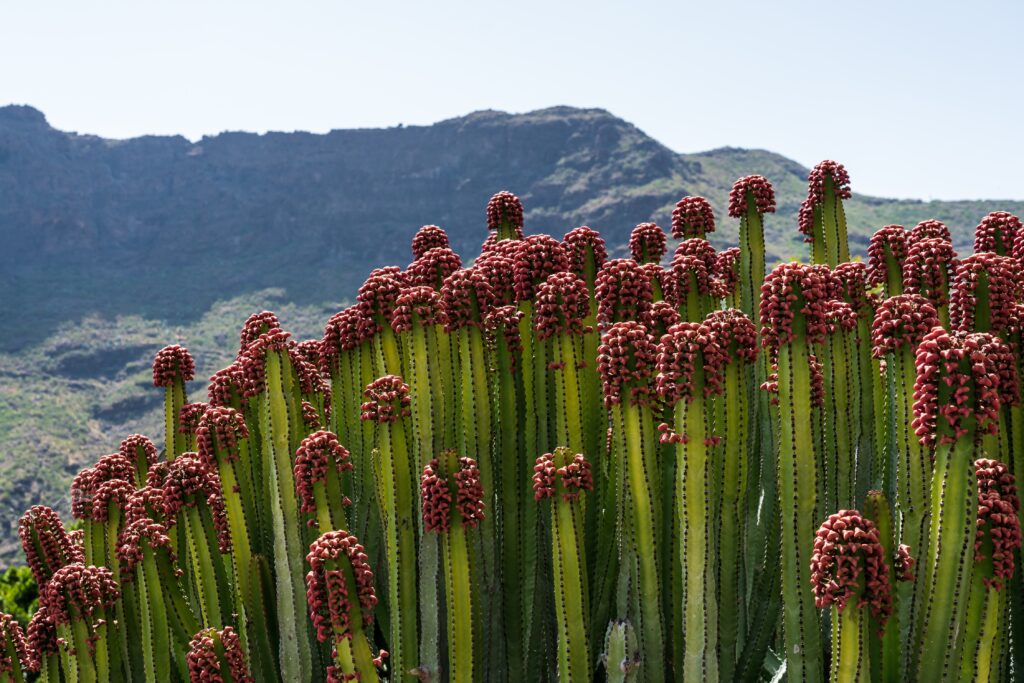
EUPHORBIA CANARIENSIS
Canary Spurge
The Canary spurge (Euphorbia canariensis) is a natural symbol of Gran Canaria. With its tall, square stems covered in thorns, it forms large candelabra-shaped bushes that can reach 4 metres in height. Inside, they create microhabitats that are home to many other species. It is one of the most characteristic plants of the dry Canarian landscape.
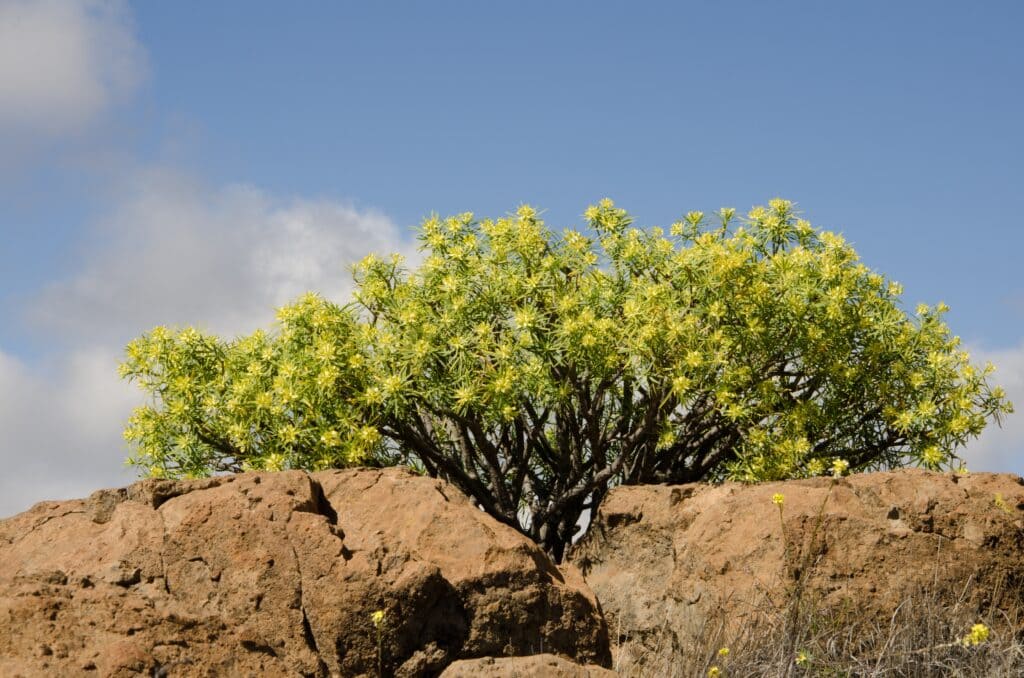
EUPHORBIA REGIS-JUBAE
King Juba's Spurge
King Juba’s spurge (Euphorbia regis-jubae) is a shrub that can grow up to 2 metres tall and is very common on the eastern islands: Gran Canaria, Lanzarote and Fuerteventura. With its tough green leaves and milky sap, it is perfectly adapted to sunny, dry areas. It is one of the most representative plants of the arid Canarian landscape.
ILEX CANARIENSIS
Small-Leaved Holly
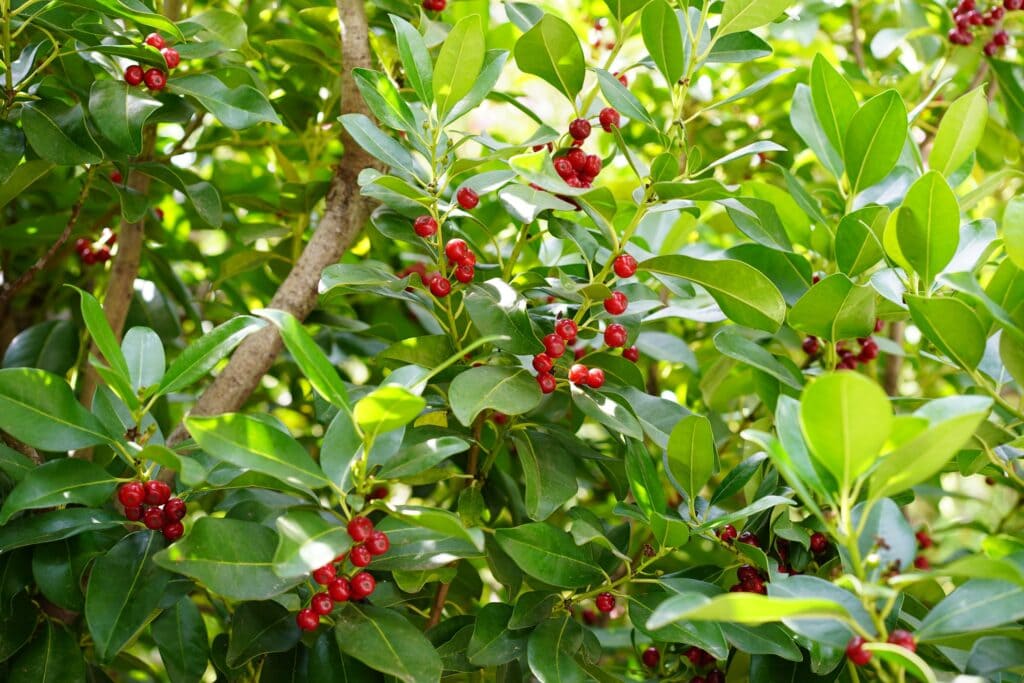
The Small-leaved holly (Ilex canariensis), with its bright red fruits, is one of the most beautiful trees in the laurel forest. Its green leaves, sometimes with small thorns, and its elegant bearing reach up to 10 metres. Like the wild orange tree, it is maintained generation after generation thanks to the shoots that grow from its base. A symbol of persistent life in the humid forests.
JUNIPERUS CEDRUS
Canary Islands Juniper
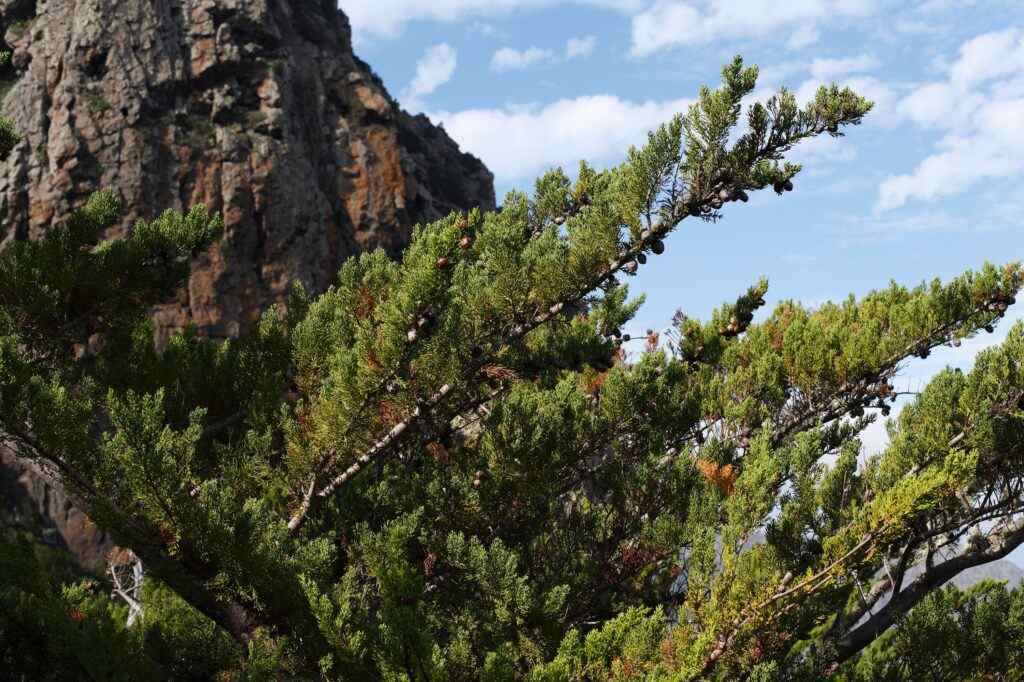
The Canary Islands juniper (Juniperus cedrus) is a robust tree that can grow up to 20 metres tall. Its needle-like leaves and reddish fruits make it unmistakable. Once very abundant, today it takes refuge on inaccessible cliffs, protected by law since 1953. It is a sacred tree of the high mountains, whose twisted trunks hold centuries of history.
JUNIPERUS PHOENICEA
Phoenicean Juniper
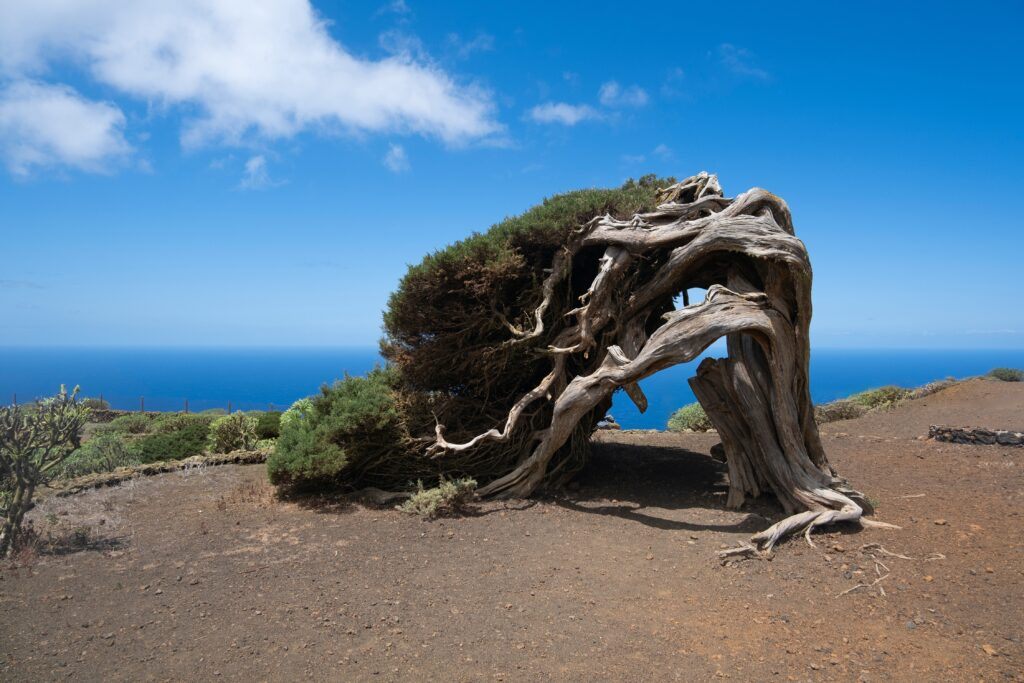
The Phoenicean juniper (Juniperus phoenicea var. canariensis) is the natural symbol of El Hierro. With a dense crown and evergreen foliage, it can reach up to 8 metres in height. Its wood is very aromatic and resistant, and its reddish fruits ripen slowly. It adapts to extreme conditions: from dunes to volcanic cliffs, withstanding winds and drought.
KLEINIA NERIIFOLIA
Verode
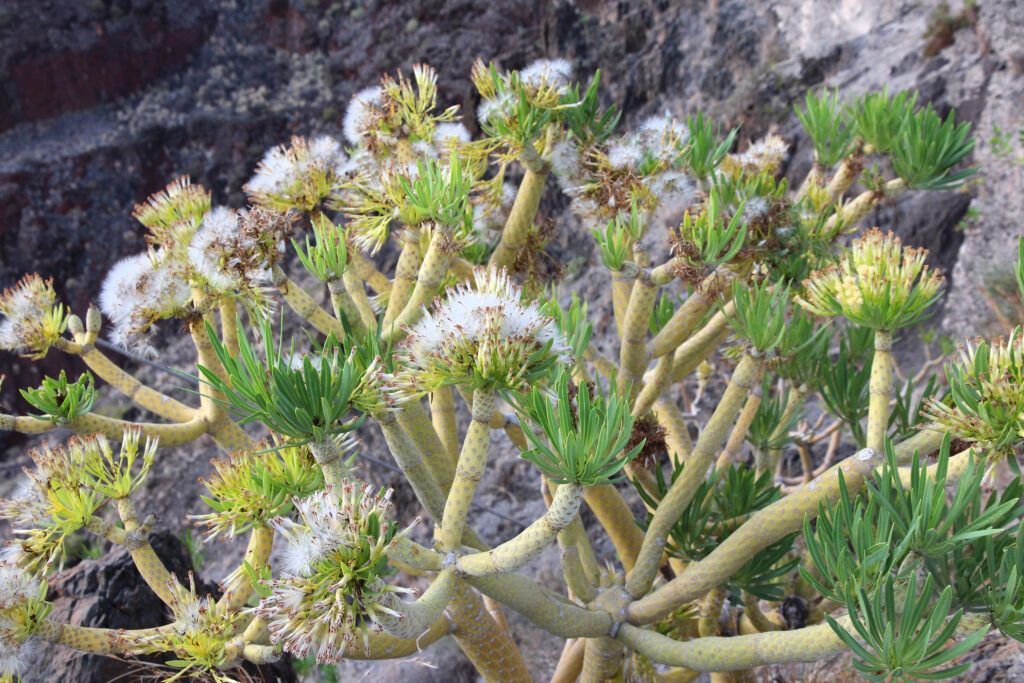
The Verode (Kleinia neriifolia) is a succulent plant endemic to the Canary Islands. Its thick, branched stems store water, allowing it to survive in arid areas. The green leaves are concentrated at the tips of the stems and fall off in the dry season. Its white flowers appear in summer and attract bees that produce excellent honey.
LAURUS NOVOCANARIENSIS
Canary Laurel
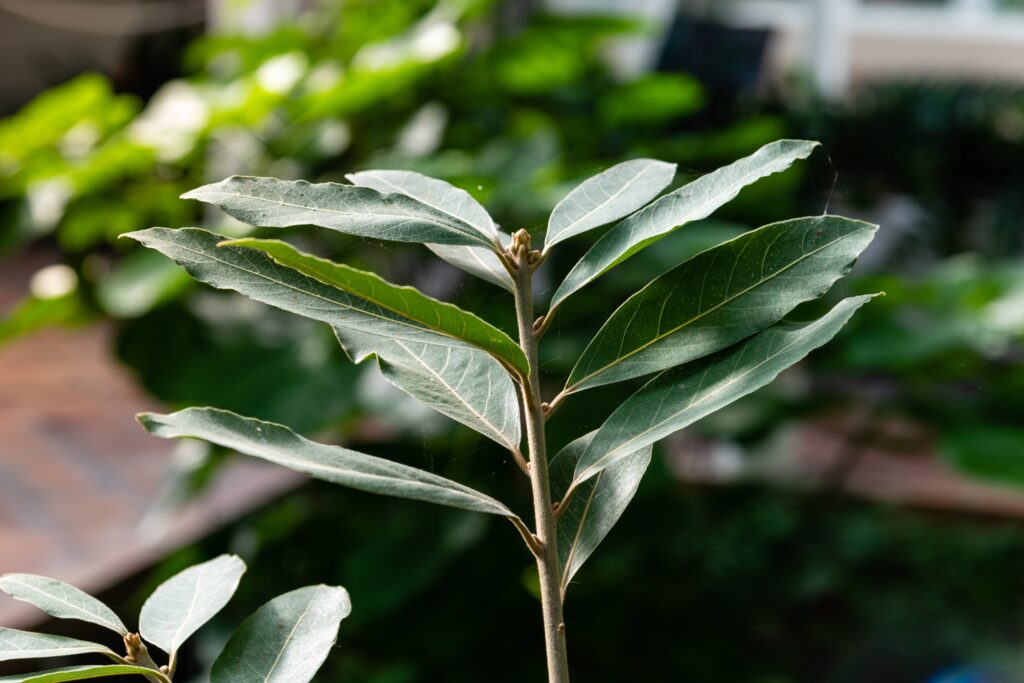
The Canary laurel (Laurus novocanariensis) is an emblematic tree of the laurel forests. With its bright green, lanceolate and highly aromatic leaves, it is reminiscent of the bay laurel used in cooking. It can grow up to 18 metres tall and produces small dark berries. It is one of the most representative species of this humid and magical ecosystem.
MYRICA FAYA
Faya
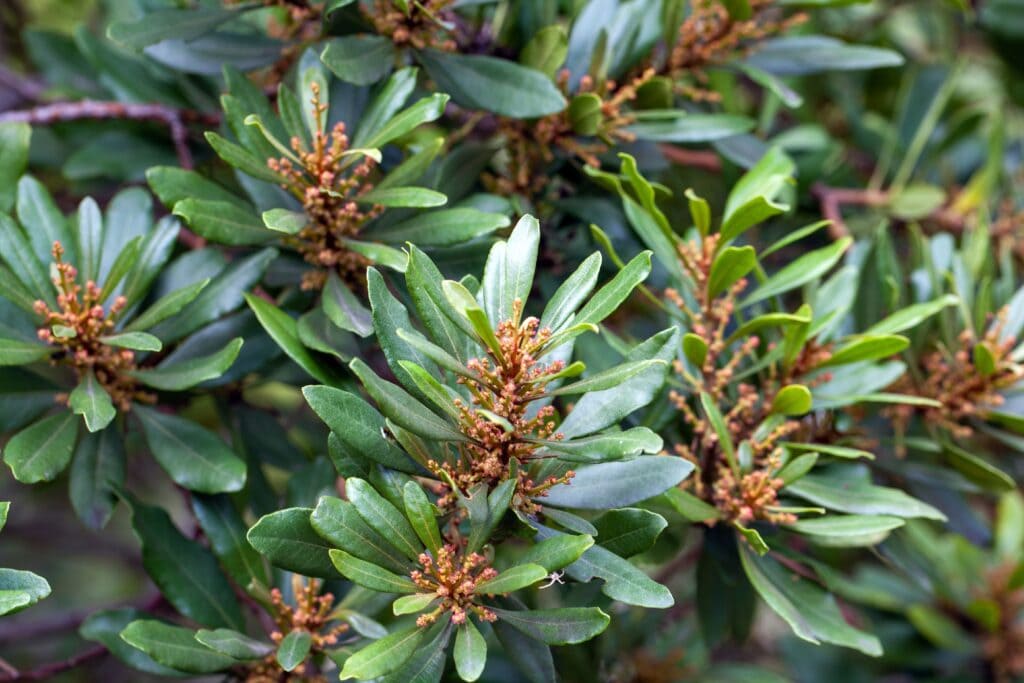
The Faya (Myrica faya) is a very common tree in the humid forests of the Canary Islands. Its dense crown of dark green leaves is reminiscent of oak. It can grow up to 18 metres tall and is distinguished by its black fruits, known locally as creces or fitos, which are edible. It is a pioneer species: it protects the soil and paves the way for other laurel forest trees.
OLEA OLEASTER
Wild Olive
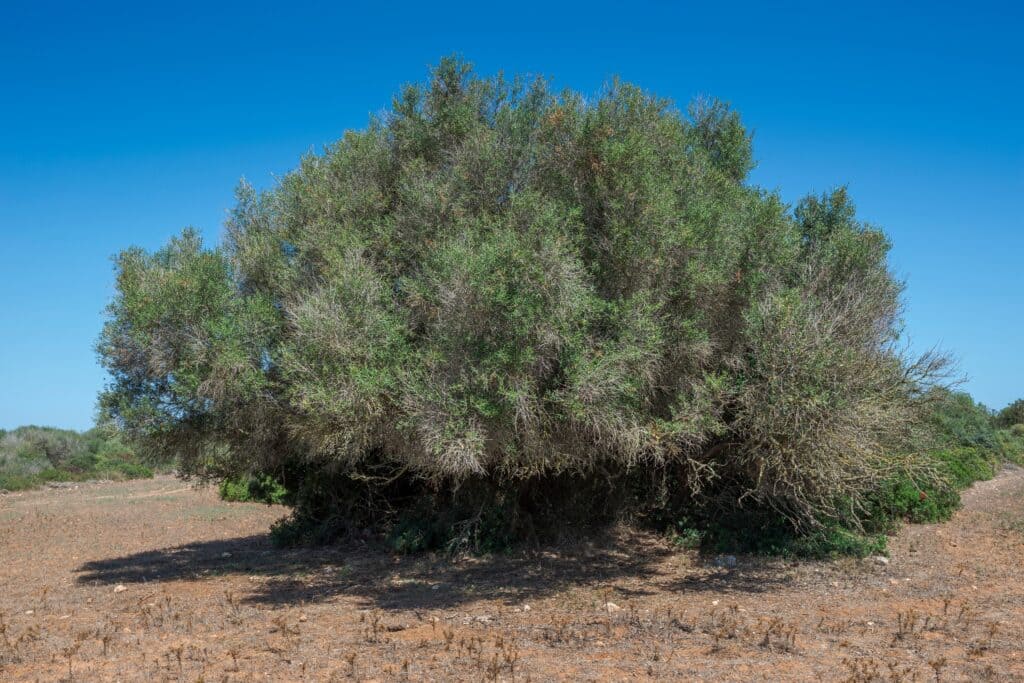
The Wild olive (Olea europaea var. sylvestris) is the wild ancestor of the cultivated olive tree. With a twisted trunk and greyish-green leaves, it grows in sunny soils and is highly resistant to drought. It produces small bitter olives, less well known than those of the cultivated olive tree, but of great ecological value. It is part of the Mediterranean landscape and is also present in the Canary Islands.
PHOENIX CANARIENSIS
Canary Island Date Palm
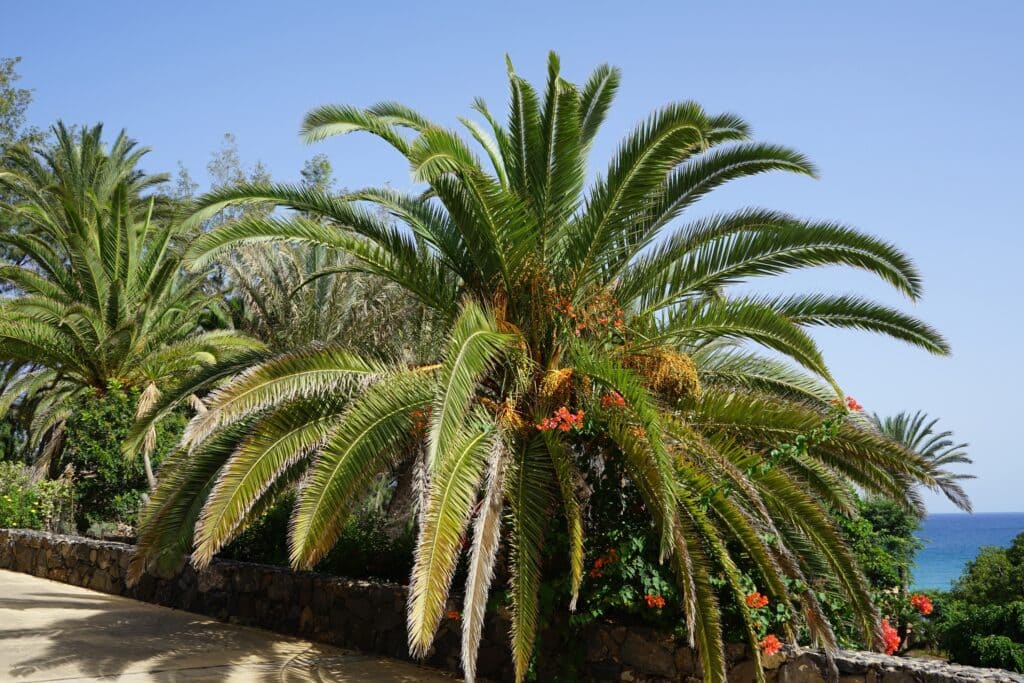
The Canary Island date palm (Phoenix canariensis) is one of the great symbols of the Canary Islands. With its imposing stature of up to 15 metres and its long arched leaves, it dominates the island landscape. It is used to produce “palm honey” in La Gomera, a unique product. Its fruits, dates, are edible, and its leaves have traditionally been used in everyday life.
PISTACIA ATLANTICA
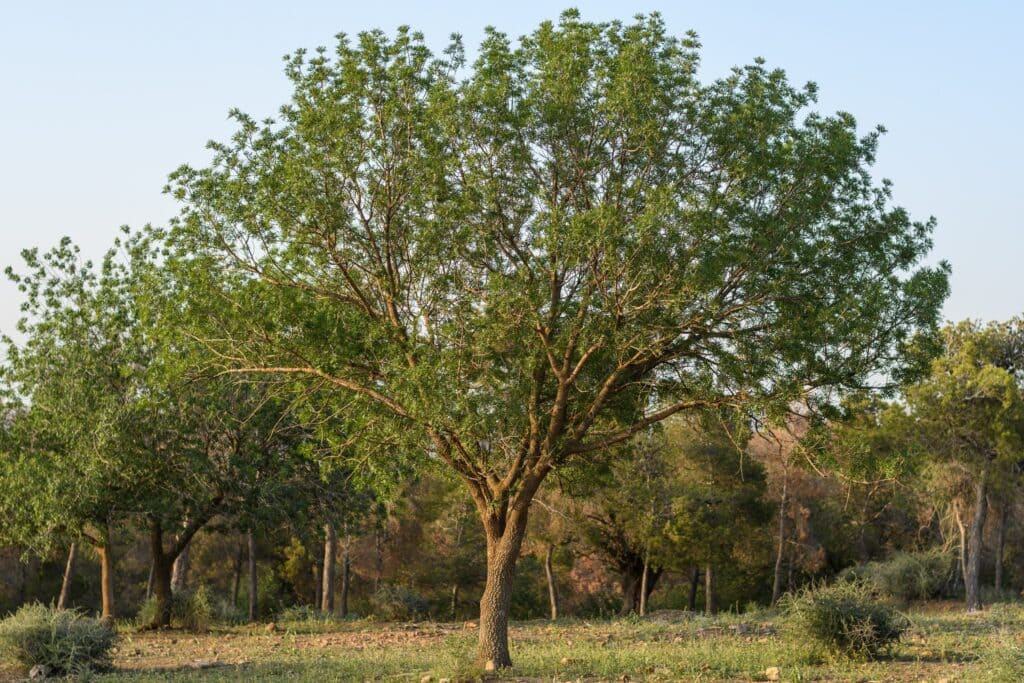
Atlantic Pistachio Tree
The Atlantic pistachio tree (Pistacia atlantica) is a highly resistant tree that can live for over a thousand years. With a broad crown and ancient appearance, it produces small reddish fruits that turn bluish when ripe. In addition to its beauty, it strengthens the soil against erosion and has been used to obtain aromatic resins and small pistachios.
TAMARIX CANARIENSIS
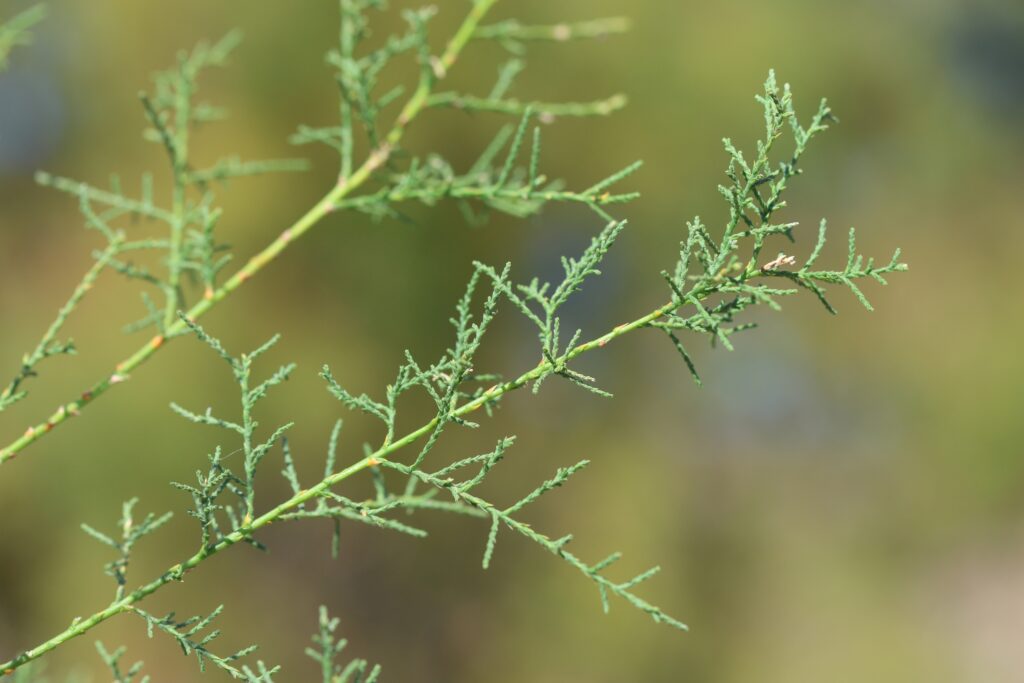
Tamarisk
The Tamarisk (Tamarix canariensis) is a small tree that usually grows near streams, depressions and saline soils. Its reddish branches and thin leaves give it a light and elegant appearance. It blooms in spring and summer with delicate pink flowers. It is a hardy species, capable of thriving in coastal areas and difficult soils, bringing freshness to the landscape.
VISNEA MOCANERA
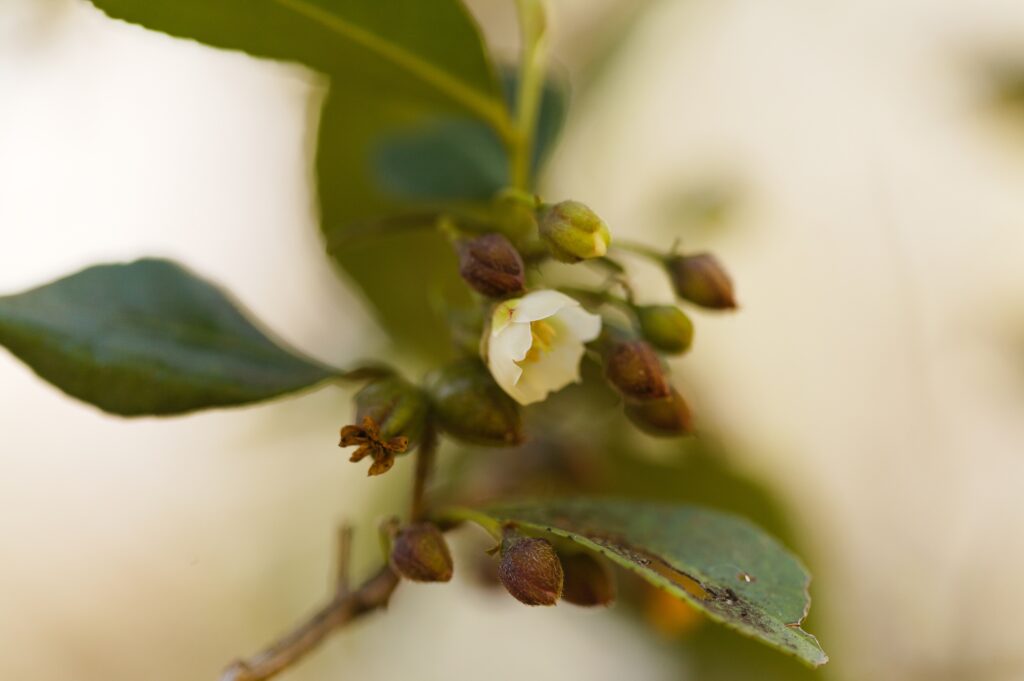
Mocan Tree
The Mocan (Visnea mocanera) is a unique tree that only grows in the Canary Islands and Madeira. Evergreen, it reaches up to 15 metres in height and is notable for its small red fruits that turn purple, almost black, when ripe. Its white, fragrant, bell-shaped flowers appear in winter. It grows in humid forests between 300 and 1000 metres above sea level and is a treasure of the Canary Islands’ laurel forest.
Live every moment
Every new day on La Gomera is an adventure waiting to be discovered. Enjoy one incredible experience after another, making your stay unforgettable.